
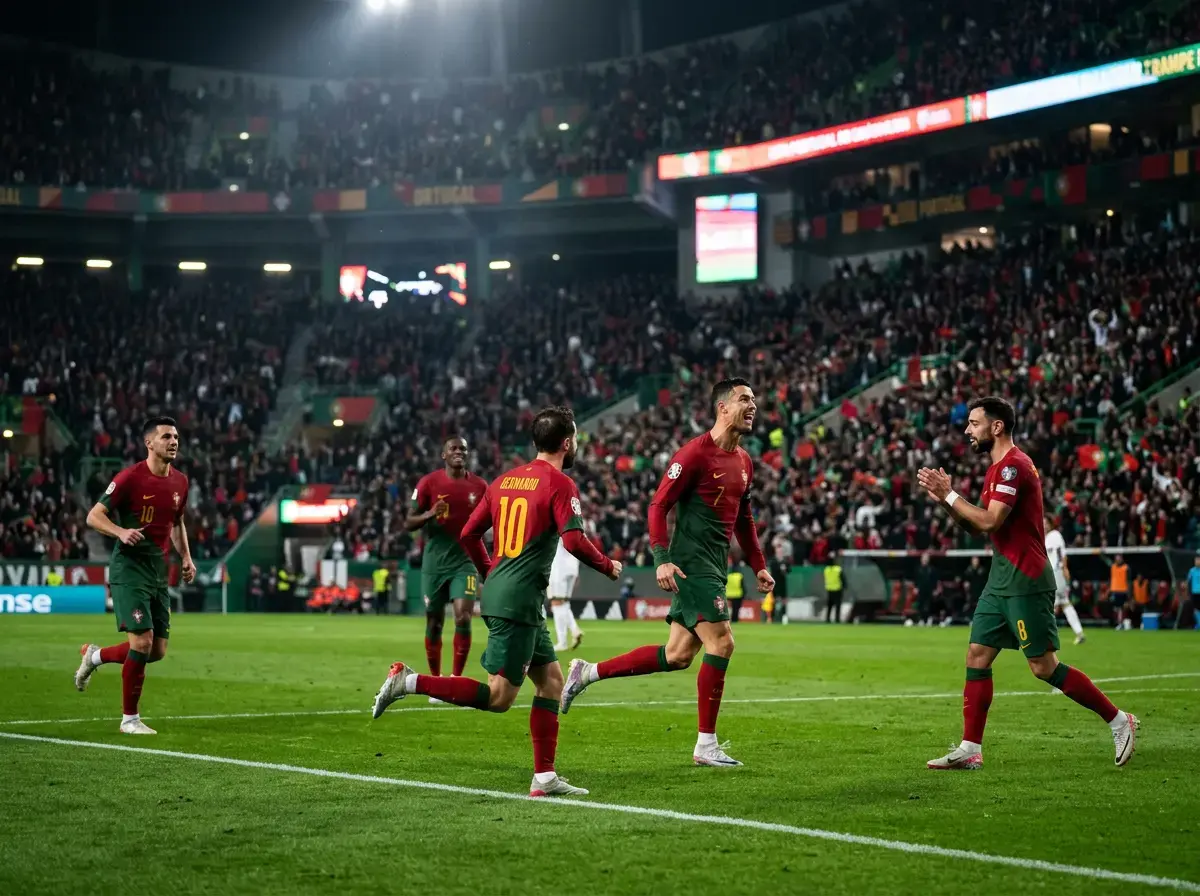
The question has hung over Portuguese football for a decade: what happens when Cristiano Ronaldo finally departs? At 41, the man who defined an era continues to represent his country, but the Saudi Pro League has become his club home, and the physical demands of elite tournament football test even the most extraordinary athletes. Portugal World Cup 2026 betting forces punters to confront this uncertainty directly. Is this Ronaldo’s last dance, a ceremonial farewell tour for a legend? Or can Portugal’s golden generation of young talents — Bruno Fernandes, Rafael Leão, João Félix — finally emerge from his shadow to deliver success on their own terms?
Portugal’s odds of approximately 12/1 reflect this transitional uncertainty. The squad possesses genuine quality across every position, with technical ability that matches any European rival. Roberto Martínez has built a system that accommodates Ronaldo while developing alternatives, and the depth from goalkeeper to striker would satisfy most national team managers. Yet the pattern of recent tournaments — quarter-final exits to Morocco in 2022, France in 2024 — suggests something prevents Portugal from converting talent into trophies. The psychological weight of Ronaldo’s presence, the tactical compromises his selection demands, the generational tension between veterans and young stars: these factors complicate what should be straightforward given the available personnel.
I rate Portugal as fair value at current prices. The 12/1 odds imply approximately 8% probability, which feels accurate given their squad quality tempered by tournament record. My value assessment sits at 5/10 — neither compelling nor dismissive. Portugal can beat anyone on their day, but their day arrives inconsistently. For punters, this creates interesting opportunities in specific markets while suggesting caution on outright bets.
Squad Overview: Generational Transition
The Portugal squad features perhaps the widest age range of any genuine contender. Cristiano Ronaldo at 41 and Pepe at 43 represent one generation, while Rafael Leão at 26 and João Neves at 21 represent another. Martínez must balance these competing demands — using veteran experience without blocking younger talents’ development, respecting legacies without sacrificing competitive edge.
Diogo Costa has established himself as first-choice goalkeeper following Rui Patrício’s decline. The Porto shot-stopper combines excellent reflexes with good distribution, his ability to play out from the back suiting Martínez’s possession-based approach. José Sá provides quality backup, creating genuine competition for the starting position.
The defence features Rúben Dias as the clear leader, his Manchester City experience providing elite-level composure and organisation. Pepe’s continued selection generates debate — his reading of the game compensates for declining pace, but tournaments demand physical qualities that age inevitably erodes. Gonçalo Inácio and António Silva represent the future, young centre-backs whose development Martínez must balance against immediate tournament demands. João Cancelo provides attacking threat from full-back, his quality undeniable despite occasionally questionable defensive discipline.
Midfield is where Portuguese quality becomes most apparent. Bruno Fernandes orchestrates from advanced positions, his passing range and goal threat making him essential to attacking play. Vitinha provides the control that allows Fernandes to push forward, his composure and technical quality anchoring the midfield. Rúben Neves offers experience and defensive awareness, while João Neves — despite sharing a surname — represents emerging talent ready to claim regular minutes.
The attack beyond Ronaldo features genuine stars. Rafael Leão’s explosive pace and dribbling ability make him one of Europe’s most dangerous wide players, his Milan form demonstrating consistency that previously eluded him. João Félix’s talent has never been questioned, only his ability to produce it consistently; in a tournament setting, his moments of magic could prove decisive. The depth extends to Gonçalo Ramos, Diogo Jota, and Pedro Neto — any of whom could start for most other nations.
Group K Preview: Portugal’s Path
Portugal’s Group K assignment presents a manageable pathway to the knockout rounds. Colombia, Uzbekistan, and DR Congo offer varying challenges that Portugal should overcome without serious concern, though the group lacks the straightforward nature that some contenders enjoy.
Colombia represent the primary opposition, their South American quality producing players capable of competing at the highest level. Luis Díaz leads an attack that can trouble any defence, while James Rodríguez’s creativity remains potent despite his advancing years. The match profile suits Portugal — technical quality against equally technical opponents, with fine margins determining the outcome. Colombia’s qualification through CONMEBOL included impressive results against Argentina and Brazil, demonstrating they cannot be dismissed lightly. I expect Portugal to win 2-1 or draw 1-1, with Colombia providing genuine resistance throughout.
Uzbekistan bring Central Asian organisation and surprising quality that has improved significantly in recent years. Their qualification through the AFC pathway demonstrated competitiveness that commands respect, though the gulf in individual quality favours Portugal enormously. A 3-0 or 4-0 victory seems likely, with Martínez potentially rotating his squad to preserve key players for more demanding fixtures.
DR Congo complete the group as African representatives whose qualification represents significant achievement. Their athletic qualities and fighting spirit will test Portuguese patience, particularly if the match remains tight. Portugal should win 2-0 or 3-0, though the fixture could prove more demanding than the scoreline suggests. The Leopards possess pace on the counter that could punish any Portuguese complacency.
The qualification pathway looks favourable. Winning the group positions Portugal against a third-placed team in the Round of 32, with a potentially kind bracket through the early knockout rounds. The quarter-finals become the meaningful test, where European rivals or South American quality await.
Martínez’s Tactical Approach
Roberto Martínez inherited a squad in transition and has worked to build a system that accommodates multiple generations. His preferred 4-3-3 formation allows Bruno Fernandes to operate in advanced positions while maintaining defensive stability through Vitinha and a screening midfielder. The full-backs push high to provide width, creating overloads that technical players exploit.
The Ronaldo question shapes tactical decisions regardless of public statements. When Ronaldo plays, Portugal become more direct, seeking balls into the box that utilise his aerial ability and positioning. When he rests, the team flows more fluidly, with Leão and Félix interchanging positions and creating through movement rather than crosses. Martínez must balance these approaches across a tournament’s duration, selecting tactics that maximise chances of success regardless of personnel decisions.
Set pieces represent a genuine Portuguese strength. Bruno Fernandes’ delivery combines with aerial threat from Dias, Ronaldo (when selected), and central midfielders to create consistent chances from dead balls. Portugal scored five goals from set pieces during qualification, demonstrating efficiency that translates to tournament football where margins are tight.
Key Players: Beyond Ronaldo
Bruno Fernandes may be Portugal’s most important player regardless of Ronaldo’s selection. His ability to create chances from central positions, combined with his own goal threat, makes him essential to Portuguese attacking play. Fernandes provides the passes that unlock defences, the set-piece delivery that creates chances, and the leadership that drives teammates to higher performance. His Manchester United experience under pressure translates to international tournaments.
Rafael Leão represents Portugal’s future — and possibly their present. His combination of pace, skill, and end product makes him unplayable when confident, though inconsistency has frustrated observers who recognise his extraordinary potential. In a tournament setting, Leão could emerge as the star that Portugal have been waiting for beyond Ronaldo. His performances at Euro 2024, despite Portugal’s exit, suggested readiness for this moment.
Rúben Dias anchors the defence with composure that sets the tone for the entire team. His partnership with whoever plays alongside him — Pepe, Inácio, or Silva — determines Portuguese defensive solidity. When Dias organises well, Portugal become difficult to break down; when he struggles, vulnerabilities emerge that opponents exploit.
Betting Analysis: Value Assessment
Portugal at 12/1 represents fair pricing that neither overvalues nor undervalues their chances. The odds imply approximately 8% probability, which aligns with my assessment given squad quality balanced against tournament record. Portugal are capable of winning the World Cup but have not demonstrated the consistency required to justify shorter odds.
Portugal to reach the quarter-finals at approximately 6/4 offers reasonable value. Their group draw facilitates comfortable qualification, and the Round of 32 should present beatable opposition. The quarter-final has become Portugal’s tournament ceiling in recent years — reaching it again represents realistic expectation. I rate this market at 6/10 for value.
Portugal to qualify from Group K at approximately 1/5 represents near-certainty priced accordingly. The margin provides no value — you would need to stake €500 to win €100 — but the probability assessment is accurate. Avoid this market unless combining in accumulators.
Leão to score in the tournament at approximately 4/6 offers reasonable odds for likely occurrence. His attacking position and Portugal’s expected goals suggest high probability, though the pricing feels tight. Consider anytime scorer in specific matches for better returns.
My Verdict: Transitional Tournament
Portugal enter World Cup 2026 in genuine transition. The Ronaldo question shapes everything — his selection, his role, the compromises required to accommodate him alongside younger talents hungry for their own moments. Whether this transition produces success or failure depends on factors impossible to predict from outside the dressing room.
The talent level supports genuine contention. Bruno Fernandes, Rúben Dias, Rafael Leão, Vitinha — these are elite players competing at the peak of their powers. The squad depth exceeds most rivals, allowing rotation without significant quality drop-off. If Martínez finds the right balance between generations, if Ronaldo accepts a reduced role gracefully, if the younger players seize their opportunity: under these conditions, Portugal could challenge for the trophy.
Yet the pattern of recent tournaments suggests caution. Quarter-final exits to Morocco (2022) and France (2024) revealed limitations that talent alone could not overcome. The tactical rigidity that Ronaldo’s presence sometimes creates, the defensive vulnerabilities against elite opponents, the inconsistency of performances across consecutive matches — these issues have persisted despite personnel changes and coaching evolution. Until Portugal demonstrate they can progress beyond the quarter-finals, betting markets should treat them as capable but flawed contenders.
My prediction places Portugal in the quarter-finals, where I expect them to face a Group L winner — potentially England or another European rival. That match represents Portugal’s tournament ceiling unless significant improvement materialises. The semi-finals remain possible but require fortune alongside quality that recent performances have not consistently demonstrated.
For betting purposes, I recommend Portugal to reach the quarter-finals at 6/4 as the primary wager. This captures their quality while acknowledging the ceiling that recent tournaments have established. Avoid outright winner bets unless prices drift beyond 16/1. And watch for Leão in player markets — his emergence as Portugal’s primary attacking threat could produce value opportunities in specific match markets. The transition beyond Ronaldo must happen eventually; this tournament may be where it begins in earnest.