
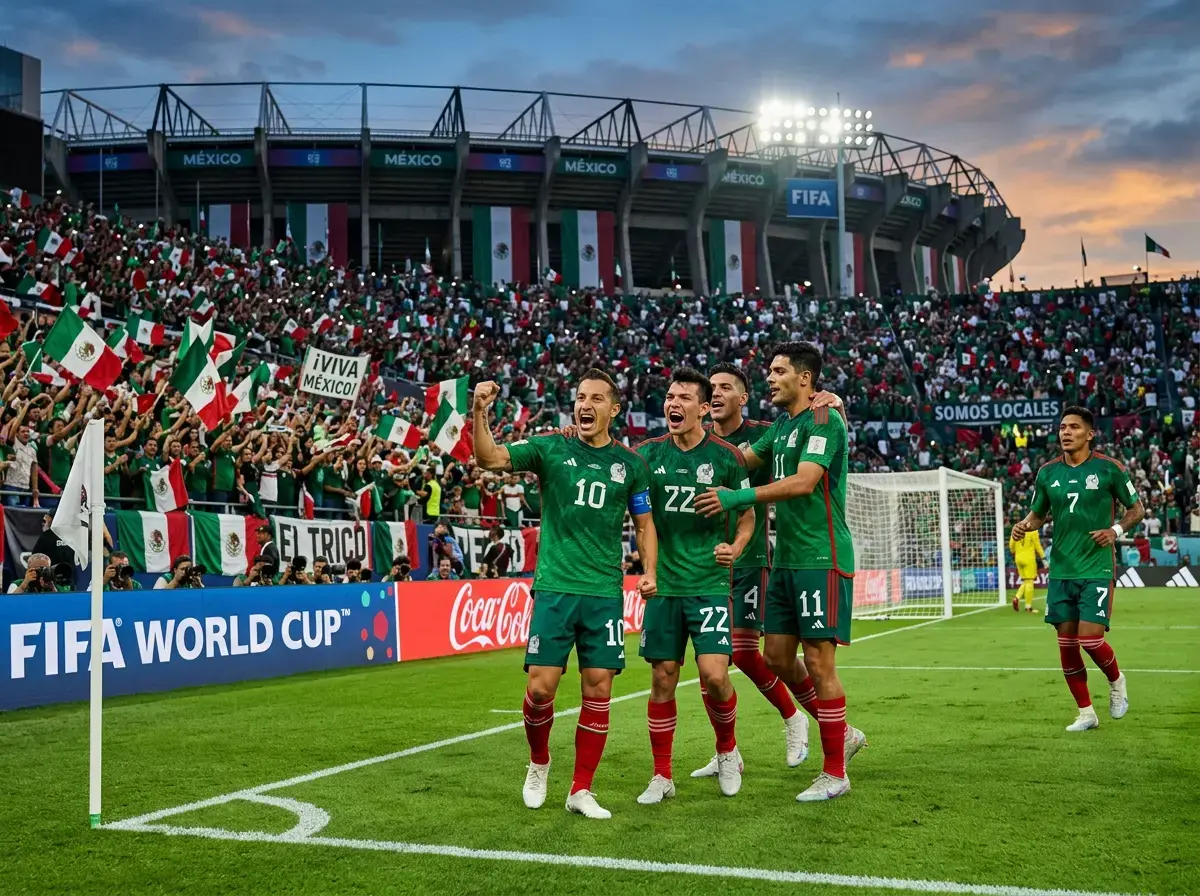
The Estadio Azteca will host the opening match of World Cup 2026 — Mexico versus South Africa on 11 June, the tournament’s ceremonial beginning. For Mexican football, this moment represents both opportunity and burden. El Tri have never progressed beyond the quarter-finals in their World Cup history, a glass ceiling that has frustrated generations of talented players and passionate supporters. The “quinto partido” — the fifth game, the quarter-final that Mexico have never won — haunts the national football consciousness. Now they host alongside USA and Canada with expectations that co-hosting status demands deep progression, yet historical patterns suggest caution about Mexican capabilities in knockout football.
Mexico World Cup betting markets price El Tri at approximately 28/1 for outright victory, reflecting both respect for their co-host status and scepticism about their ability to overcome historical limitations. The squad features genuine quality — Edson Álvarez, Hirving Lozano, Santiago Giménez — supplemented by passionate home support that will transform Mexican venues into cauldrons of intensity. Yet the Round of 16 has become Mexico’s tournament graveyard: seven consecutive exits at that stage since 1994, a pattern so consistent it transcends coincidence.
I rate Mexico as speculative value at current prices. The 28/1 odds imply approximately 3.5% probability, which feels marginally pessimistic given co-host advantages. My value assessment sits at 5/10 — interesting for punters who believe home advantage can break historical patterns, but not a confident recommendation given the consistency of past failures. The Mexican ceiling remains unclear; their floor involves group qualification followed by familiar Round of 16 heartbreak.
Squad Overview: El Tri’s Generation
Mexico’s squad blends European-based stars with Liga MX reliability, creating depth that allows tactical flexibility depending on opposition quality. The core has experience of pressure matches through club and international competition, though translating that experience to World Cup knockout success remains the elusive goal.
Guillermo Ochoa has been replaced as first-choice goalkeeper following his retirement from international duty. Luis Malagón has emerged as the primary option, his Club América performances demonstrating the shot-stopping and command required at international level. The transition creates uncertainty that only tournament football can resolve.
The defence features Jorge Sánchez and Johan Vásquez as experienced options who have proven themselves in European competition. César Montes provides Liga MX solidity, while young talents push for involvement. The defensive organisation has improved under recent coaching, though vulnerabilities against pace remain a concern for matches against elite opponents.
Edson Álvarez anchors the midfield with Premier League experience that translates directly to international pressure. The West Ham midfielder combines defensive discipline with progressive passing that initiates Mexican attacks. His physical presence and tactical intelligence make him essential to Mexican structure. Alongside him, options like Erick Sánchez and Luis Romo provide different qualities depending on match demands.
The attack features Santiago Giménez as the primary goal threat, his Feyenoord performances demonstrating clinical finishing that Mexican football has sometimes lacked. Hirving Lozano provides pace and directness from wide positions, though injury concerns have disrupted recent seasons. The attacking depth extends to Julián Quiñones and emerging talents who add unpredictability to Mexican forward play.
Group A Preview: Opening Night Pressure
Mexico’s Group A assignment creates immediate pressure as tournament hosts. South Africa, South Korea, and Czechia form a group where Mexican qualification should be comfortable, though the opening match spotlight intensifies scrutiny on every aspect of their performance.
South Africa in the opening match presents symbolic significance alongside genuine challenge. Bafana Bafana’s qualification demonstrates African football’s improving depth, while their athletes and organised approach will test Mexican composure under opening-night pressure. The Estadio Azteca atmosphere should favour Mexico, but tournament openers produce unexpected results when favourites succumb to occasion nerves. The world will be watching as the 2026 edition begins — a stage that creates both opportunity and risk for Mexican players. Mexico should win 2-1 or 3-1, though the match could prove tighter than many expect.
South Korea bring Asian quality that has improved significantly across recent World Cups. Son Heung-min leads an attack capable of troubling any defence, while Korean tactical discipline creates difficult matchups for technically-oriented opponents. The 2022 group stage saw South Korea defeat Portugal, demonstrating capability at the highest level. Korean fitness and intensity present different challenges than European or South American opponents. I expect a competitive match — Mexico 1-1 or 2-1 — with neither team establishing dominance throughout.
Czechia represent the opponent that eliminated Ireland from qualifying, making this fixture emotionally resonant for our readers. The Czech tactical organisation and set-piece threat present challenges that Mexico must overcome professionally. Patrik Schick’s aerial presence creates genuine danger from crosses and corners. This should be Mexico’s most comfortable group fixture, with a 2-0 or 3-0 victory expected, though any complacency could produce unexpected complications.
The group pathway should yield qualification as group winners. Second place remains acceptable given the expanded format, but the expectations placed on co-hosts demand topping the group to maintain confidence for the knockout rounds.
Key Players: El Tri’s Core
Edson Álvarez represents Mexico’s most important player. His midfield presence allows El Tri to control matches through possession and pressing, while his defensive awareness protects the back line during opposition attacks. The West Ham midfielder has developed into one of the Premier League’s elite defensive midfielders, and his experience of pressure matches translates directly to tournament football. When Álvarez performs well, Mexico perform well; his absence through injury or suspension would significantly diminish their capabilities.
Santiago Giménez provides the goal threat that Mexican football has sometimes lacked. His movement and clinical finishing create opportunities that less composed strikers would miss. The Feyenoord forward has matured into a genuine European-level striker, his Eredivisie performances demonstrating consistency that supports international ambitions. In a home World Cup, Giménez could emerge as one of the tournament’s leading scorers.
Hirving Lozano offers pace and directness that stretches opposition defences. His ability to beat defenders one-on-one creates matchup advantages that tactical organisation cannot neutralise. The Napoli winger has struggled with injuries in recent seasons, but when fit, he remains one of CONCACAF’s most dangerous attacking players. His experience of the Estadio Azteca atmosphere will prove valuable during home matches.
The Quinto Partido Curse
Seven consecutive Round of 16 exits since 1994 creates psychological weight that pure ability cannot dismiss. Mexican football has analysed, debated, and agonised over this pattern without finding solutions that translate to results. The quinto partido has become self-fulfilling prophecy, each exit reinforcing the narrative that Mexico cannot progress beyond a certain point.
The factors behind this pattern remain debated. Some point to tactical conservatism in knockout matches, where Mexican coaches have historically prioritised defensive security over attacking ambition. Others highlight physical limitations that emerge across tournament duration, as Mexican players tire against opponents who maintain intensity. Still others emphasise psychological fragility — the weight of national expectation creating pressure that talented individuals cannot withstand.
Co-hosting provides opportunity to break this pattern through home advantage that previous tournaments lacked. The familiar conditions, passionate crowds, and logistical comforts may provide the marginal gains required to progress. Alternatively, increased pressure from hosting could intensify the psychological burden that has contributed to past failures.
Betting Analysis: Co-Host Value
Mexico at 28/1 offers speculative value for believers in home advantage overcoming historical patterns. The odds imply 3.5% probability, which I consider marginally pessimistic given co-hosting benefits. However, the consistency of Round of 16 exits justifies market scepticism about Mexican knockout capability.
Mexico to reach the quarter-finals at approximately 11/4 provides the most interesting betting angle. This requires breaking the quinto partido curse, which home advantage may facilitate. I rate this market at 6/10 for value — the pricing compensates for historical patterns while offering genuine returns if Mexico finally progress.
Mexico to qualify from Group A at approximately 1/4 represents near-certainty priced accordingly. The group opponents lack the quality to threaten Mexican progression, though the pricing offers no value. Avoid unless building accumulators.
Mexico to win Group A at approximately 8/11 offers reasonable odds for probable outcome. South Korea represent the primary threat, but home advantage should prove decisive. I rate this at 5/10 — fair pricing without compelling edge.
My Verdict: Breaking the Curse?
Mexico enter their home World Cup with the same quality and passion that has characterised previous campaigns. The squad features genuine talent, the crowds will provide incredible atmosphere, and the motivation to end historical frustration burns intensely. Yet the pattern of Round of 16 exits suggests limitations that home advantage alone may not overcome.
The coaching factor deserves attention. Mexican football has cycled through managers seeking the solution that breaks the curse, without finding the approach that translates to knockout success. The current setup must prove it has addressed the tactical and psychological issues that have plagued predecessors. Whether the existing coaching structure possesses the answers that previous regimes lacked remains uncertain until knockout matches reveal the truth.
The generational context adds pressure. This squad represents perhaps the best collection of Mexican talent since the 1986 generation that reached the quarter-finals. Álvarez, Giménez, Lozano — these players deserve better than another Round of 16 exit on home soil. The opportunity to finally break through, to deliver the quinto partido victory that has eluded predecessors, should provide motivation that transcends individual performances.
The home advantage factor could prove decisive. Mexican venues will generate atmospheres that visiting teams cannot replicate. The Estadio Azteca’s altitude and intensity have historically troubled opponents who underestimate environmental challenges. If Mexico reach the Round of 16 against a team unfamiliar with these conditions, home advantage could provide the marginal gains required for progression.
My prediction places Mexico in the Round of 16, where historical patterns suggest another exit awaits. The quarter-finals remain possible if home advantage proves decisive and the bracket aligns favourably, but progression beyond requires sustained excellence that Mexican football has never demonstrated at World Cup level. The curse may finally break; alternatively, familiar disappointment may await another generation of passionate supporters.
For betting purposes, I recommend Mexico to reach the quarter-finals at 11/4 for those seeking speculative exposure to curse-breaking potential. Avoid outright winner bets at 28/1 — the historical pattern justifies scepticism regardless of home advantage. Watch for group-stage value in specific match markets where Mexican quality should prevail against limited opposition.