
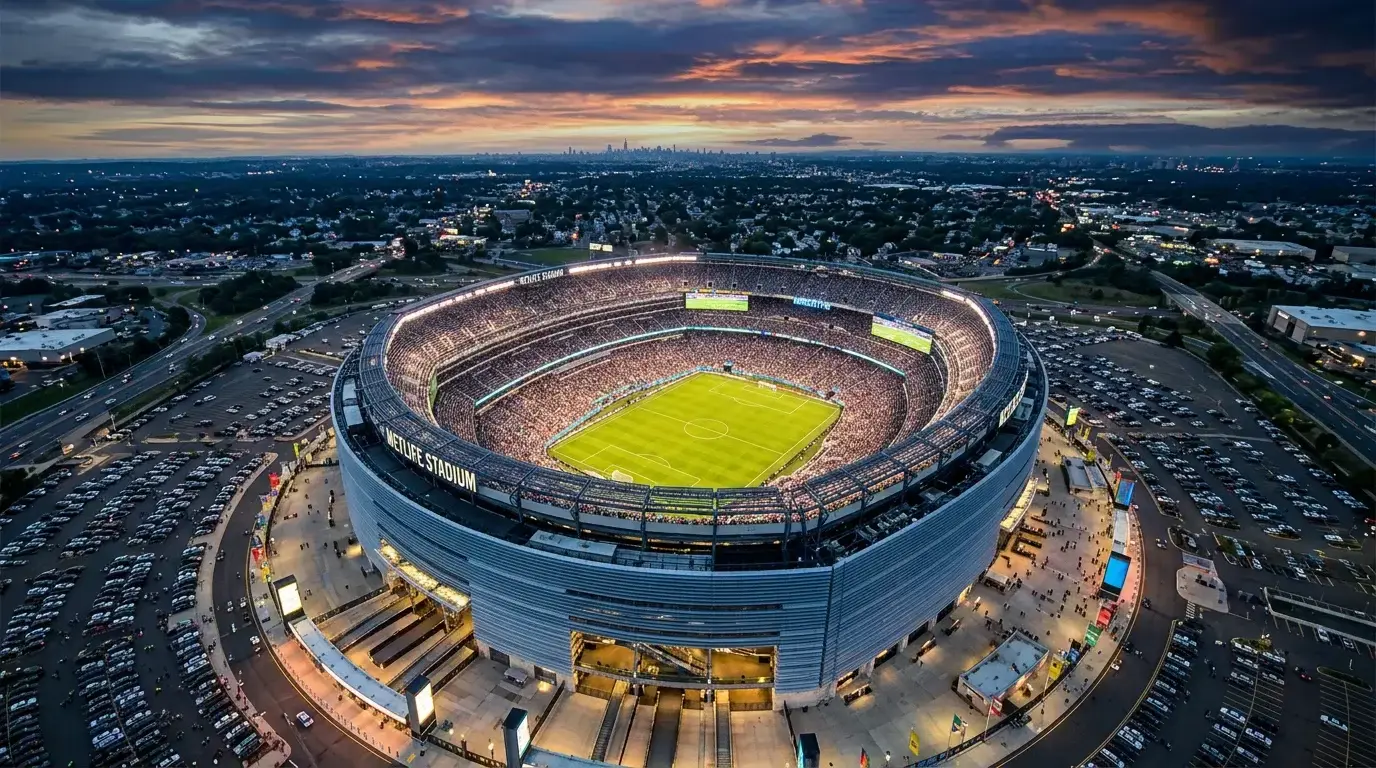
On 19 July 2026, the world’s eyes will focus on East Rutherford, New Jersey, where MetLife Stadium will host the biggest single sporting event on Earth. The World Cup Final brings together the planet’s two best teams in a match watched by billions, and this venue will join the pantheon of legendary football locations that includes the Maracanã, Wembley, and Estadio Azteca. For Irish supporters making the journey, understanding this stadium’s character and challenges enhances an experience that many will remember as life-defining.
MetLife Stadium represents American sporting infrastructure at its most impressive. Built in 2010 as home to both the New York Giants and New York Jets of the NFL, it was designed for football’s demands but will adapt seamlessly to soccer’s global spectacle. The stadium sits just outside New York City, technically in New Jersey but functionally part of the greater metropolitan area that serves as America’s gateway. This location creates logistical considerations that travelling supporters must understand.
My assessment of MetLife as Final venue centres on capacity, accessibility, and atmosphere potential. The stadium delivers on all three criteria, though distance from Manhattan and limited public transport requires planning that European venues do not demand. Understanding these factors before travel ensures Irish supporters experience the Final as celebration rather than frustration.
Stadium Profile and Specifications
MetLife Stadium’s numbers tell an impressive story. The venue holds 82,500 spectators for football configuration, making it among the largest World Cup stadiums in tournament history. The open-air design creates atmospheric conditions that roof-enclosed venues cannot match, though weather exposure becomes consideration for spectators and players alike. The pitch dimensions meet FIFA requirements, and infrastructure upgrades for World Cup 2026 ensure broadcast and operational capabilities that global viewership demands.
The stadium complex spans 300 acres in the Meadowlands Sports Complex, sharing space with the Meadowlands Racetrack and various entertainment facilities. Parking accommodates over 28,000 vehicles, essential given limited public transport options that distinguish this venue from urban European stadiums. The site’s scale creates both advantages and challenges: space for massive gatherings but distance from urban amenities that supporters might expect.
Construction cost exceeded $1.6 billion, making MetLife among the most expensive stadiums ever built at completion. The investment shows in facilities quality, from concourse capacity to restroom availability to technology integration. American stadiums prioritise spectator comfort in ways that older European venues cannot match, and MetLife exemplifies this approach through design choices that enhance viewing experience.
World Cup 2026 Match Schedule
MetLife Stadium hosts multiple fixtures throughout the tournament, building toward the ultimate climax. Understanding which matches occur here helps supporters plan travel that maximises World Cup experience while managing costs and logistics.
| Date | Round | Match | Irish Time |
|---|---|---|---|
| 15 June | Group H | Spain vs Uruguay | 23:00 |
| 16 June | Group I | France vs Norway | 02:00 |
| 22 June | Group J | Argentina vs Austria | 23:00 |
| 23 June | Group K | Portugal vs Colombia | 02:00 |
| 4 July | Round of 16 | TBC vs TBC | 23:00 |
| 14 July | Semi-Final | TBC vs TBC | 02:00 |
| 19 July | Final | TBC vs TBC | 20:00 |
The Final kicks off at 15:00 local time, translating to 20:00 Irish time. This scheduling allows European audiences comfortable viewing without requiring late-night commitment, reflecting FIFA’s recognition of their primary broadcast markets. The semi-final at 02:00 Irish time demands more dedication, but those fortunate enough to witness the Final live avoid timezone challenges entirely.
The World Cup Final: What to Expect
I have attended multiple major finals across different sports and venues, and nothing compares to the specific tension that a World Cup Final creates. The atmosphere builds for hours before kick-off, as supporters from two nations occupy the same space with shared anticipation and competing dreams. MetLife Stadium’s capacity ensures 80,000+ voices creating noise levels that affect players and match dynamics.
The Final atmosphere differs fundamentally from group stage fixtures. Stakes eliminate casual spectators, leaving only the devoted and fortunate who have secured tickets through allocation processes that exclude most applicants. Both sets of supporters understand the moment’s significance, creating collective energy that transcends normal sporting tribalism.
Weather in New Jersey during mid-July typically ranges from 25-32 degrees Celsius with significant humidity. The open-air stadium provides no protection from afternoon sun, making hydration and sun protection essential for supporters attending the Final. Players will face similar challenges, potentially affecting match tempo and substitution strategies.
Security protocols for the World Cup Final exceed any previous sporting event hosted in the United States. Expect extensive screening, prohibited item restrictions, and arrival requirements several hours before kick-off. Patience becomes essential virtue when 80,000 people attempt to enter a single venue simultaneously.
Getting to MetLife from Ireland
Irish supporters planning MetLife Stadium attendance face logistical decisions that shape their entire World Cup experience. The journey from Dublin to East Rutherford involves transatlantic flight, ground transport, and accommodation choices that multiply quickly across tournament duration.
Dublin to Newark Liberty Airport offers the most convenient flight option, with journey time around seven hours and multiple daily services. Newark sits approximately 15 miles from MetLife Stadium, making it closer than JFK or LaGuardia alternatives. Car rental from Newark airport provides flexibility that public transport cannot match, though stadium parking costs add to overall expenses.
New Jersey Transit operates train services from various New York-area stations to Meadowlands Sports Complex during major events. This option avoids parking concerns but requires understanding American rail schedules that differ significantly from Irish expectations. The train journey from Manhattan’s Penn Station takes approximately 25 minutes when event services operate.
Accommodation near MetLife Stadium itself proves limited, with most options requiring travel from Manhattan, Jersey City, or surrounding New Jersey communities. Manhattan hotels provide superior entertainment options but demand additional travel time to stadium. Jersey City offers compromise: lower costs than Manhattan with reasonable stadium access.
Budget estimates for Irish supporters attending the Final vary dramatically based on choices. Flight and basic accommodation for five nights might cost €2,000-3,000, while premium experiences with multiple match attendance could exceed €10,000. Early booking reduces costs significantly, though Final tickets remain the largest variable that no amount of planning can guarantee.
Stadium Factor: Betting Considerations
Does venue affect match outcomes in ways that inform betting decisions? My analysis suggests minimal direct impact from MetLife Stadium specifically, but several considerations merit attention when assessing fixtures scheduled for this venue.
The open-air design creates weather exposure that enclosed stadiums eliminate. Hot, humid July conditions favour teams comfortable with such environments, potentially disadvantaging European nations accustomed to temperate climates. However, major international squads prepare for varied conditions, reducing practical impact.
Pitch conditions at tournament conclusion depend on maintenance across multiple fixtures. MetLife’s grass surface will host several matches before the Final, with groundskeeping quality determining playing surface condition. Well-maintained turf favours technical teams; deteriorated conditions benefit physical approaches.
Crowd composition in knockout rounds depends on qualification outcomes. If Mexico, USA, or other CONCACAF nations reach MetLife fixtures, home support creates atmospheric advantages. European or South American finalists face potentially neutral crowds that reduce atmospheric pressure.
The Final itself eliminates most venue-specific considerations. Both finalists will have acclimatised through tournament progression, pitch conditions will be optimised for the biggest match, and crowd composition reflects global allocation that prevents overwhelming advantage for either team.
My MetLife Assessment
MetLife Stadium represents appropriate choice for World Cup Final venue. The capacity matches global significance, infrastructure meets FIFA requirements, and New York metropolitan location provides accessibility that remote American venues cannot match. Irish supporters making the pilgrimage will experience world-class facilities in a city that offers entertainment beyond football.
The challenges are real but manageable. Distance from Manhattan requires planning, transport options demand research, and accommodation costs reflect New York market realities. None of these obstacles should deter supporters committed to experiencing football’s ultimate event live.
Ticket acquisition remains the primary barrier for most supporters. FIFA’s allocation process distributes Final tickets through national associations, sponsor packages, and general ballots that produce overwhelming demand against limited supply. Those fortunate enough to secure tickets should consider the expense worthwhile regardless of financial strain, as this experience occurs perhaps once in a lifetime.
For those watching from Ireland, the 20:00 Final kick-off creates perfect Sunday evening viewing that requires no schedule adjustment. Gather friends, prepare appropriately, and witness history from wherever you are. Not everyone can attend in person, but shared experience transcends physical presence.
The New York metropolitan area offers Irish supporters cultural connections that other American cities cannot match. Irish-American populations in the region create familiar atmospheres in countless bars and restaurants, while the city itself provides entertainment options beyond football that justify extended stays. Combine World Cup Final attendance with New York exploration for a trip that transcends single-event focus.
Weather preparation deserves emphasis for supporters attending any July fixture at MetLife. The open-air design provides no protection from sun or heat, making sunscreen, hydration, and appropriate clothing essential rather than optional. American sporting events typically include extensive concession availability, but planning personal supplies reduces dependence on venue services during peak demand periods.