
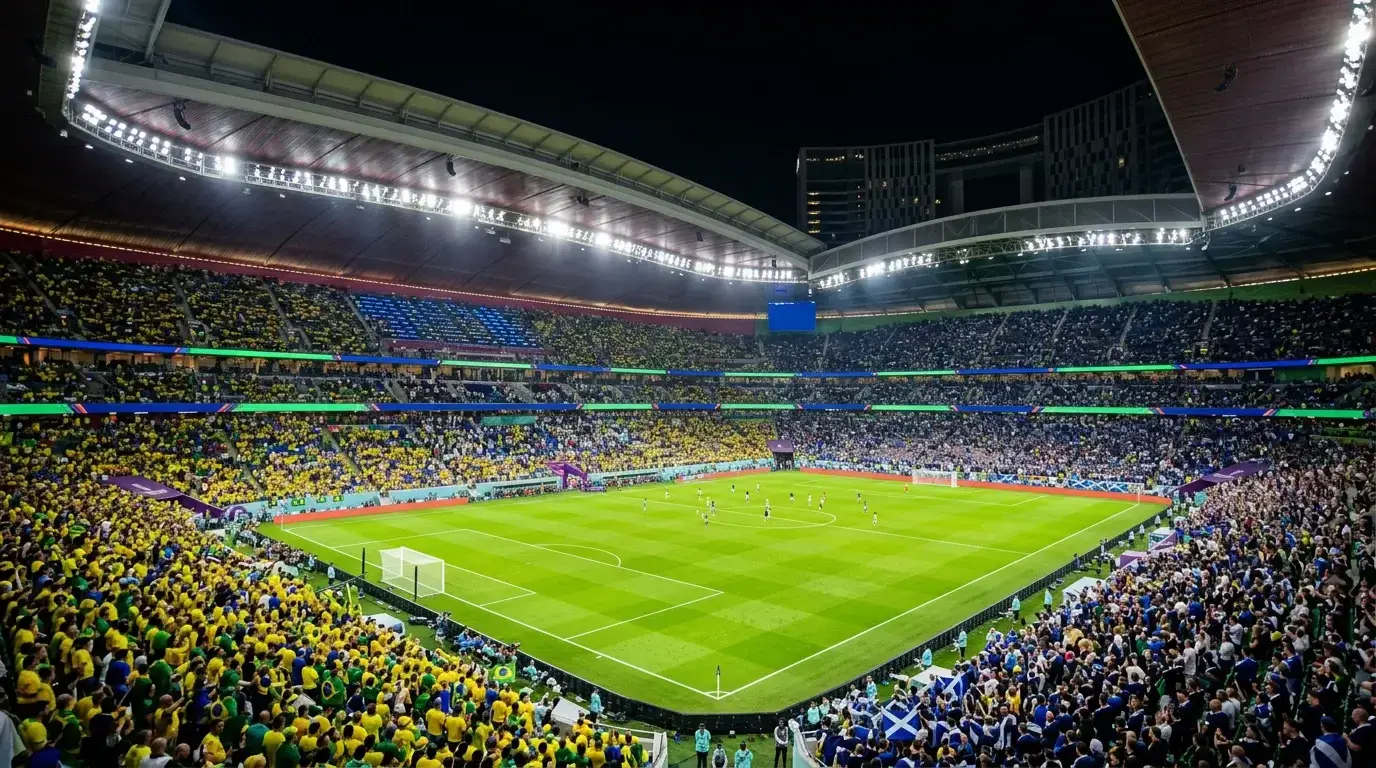
I sat in a Dublin pub watching Czechia knock Ireland out on penalties, and somewhere between the third pint and the final whistle, a mate turned to me and said: “Well, at least we can cheer for Scotland now.” He was right. World Cup 2026 Group C has become the most emotionally charged draw in this tournament for Irish punters, and I am here to break down exactly why our Celtic neighbours face both enormous opportunity and brutal challenge in what I consider the most fascinating group of the entire competition.
Group C reads like a script written for maximum drama. Brazil arrive as five-time champions desperate to end a 24-year trophy drought. Morocco return as the heroes who reached the 2022 semi-finals and redefined what African football could achieve on the world stage. Haiti qualified for their first World Cup since 1974, carrying the hopes of an entire Caribbean nation. And Scotland, our neighbours and cultural kin, step onto World Cup turf for the first time since France 1998 with a squad genuinely capable of causing problems.
The bookmakers have priced this group with predictable conservatism: Brazil heavy favourites, Morocco expected to join them in the knockout rounds, and Scotland fighting for scraps alongside Haiti. I disagree with that assessment. The mathematics of the expanded 48-team format create qualification pathways that did not exist before, and Scotland’s tactical discipline under Steve Clarke makes them far more dangerous than their odds suggest. Let me walk you through every team, every fixture, and every betting angle worth considering in World Cup 2026 Group C.
Four Nations, Four Stories: Understanding the Group
The 2018 World Cup draw produced a so-called “Group of Death” that featured Germany, Mexico, Sweden, and South Korea. Germany finished last. The point here is straightforward: reputation means nothing once the whistle blows. Group C contains massive disparities in FIFA ranking and historical pedigree, but football has a way of humbling favourites and elevating underdogs. Each of these four teams carries distinct strengths, weaknesses, and motivations that will shape how this group unfolds.
Brazil: Carrying the Weight of Expectation
Twenty-four years without a World Cup trophy has transformed Brazil from confident champions into a nation haunted by near-misses and catastrophic failures. The 7-1 demolition by Germany in 2014 remains a psychological scar that this generation of players has inherited but never directly experienced. Vinícius Jr, Rodrygo, and Endrick represent a new wave of Brazilian talent that plays primarily in European leagues and approaches the game with efficiency rather than the improvised flair of previous generations.
Brazil will dominate possession in Group C. Their technical quality means Haiti and Scotland will struggle to maintain the ball for extended periods, and even Morocco will find themselves defending deep when facing the Seleção. The question is not whether Brazil can create chances but whether they can finish them when opponents park 10 men behind the ball. In Qatar 2022, Brazil scored just twice against South Korea and failed to break down Croatia in the quarter-final shoot-out defeat. They remain vulnerable when forced to attack organised defences, and both Morocco and Scotland will offer exactly that challenge.
Morocco: Defending an Historic Legacy
Morocco’s run to the 2022 semi-finals changed perceptions of African football permanently. Walid Regragui built a team that combined defensive steel with rapid counter-attacking threat, and the core of that squad returns for 2026. Achraf Hakimi remains one of the finest right-backs in world football, Youssef En-Nesyri provides aerial presence and goal threat, and the collective spirit that carried them past Spain and Portugal on penalties endures.
The challenge for Morocco lies in replicating that magic as favourites rather than underdogs. They enter Group C with genuine expectations of progression, and that psychological shift can undermine teams built on fighting spirit. I expect Regragui to maintain the defensive organisation that served them well, but opponents now study their patterns more carefully. Scotland will have watched hours of Morocco footage preparing for their Matchday 2 clash, and Steve Clarke’s attention to tactical detail makes him exactly the kind of manager who can exploit weaknesses others miss.
Scotland: Celtic Brothers at the World Cup
Twenty-eight years. That is how long Scotland has waited to return to the World Cup, and the significance of this moment cannot be overstated for Irish supporters watching with genuine emotional investment. The Celtic connection between our nations runs deeper than sporting rivalry. Glasgow’s Celtic FC has long served as a spiritual home for Irish diaspora, and the Tartan Army’s presence in American stadiums will include thousands of Irish voices singing alongside them.
Steve Clarke has built Scotland into a defensively disciplined unit that executes game plans with remarkable consistency. Scott McTominay’s emergence as a goal threat from midfield, John McGinn’s tireless running, and Andrew Robertson’s experience at the highest level provide a foundation that can compete against anyone over 90 minutes. Scotland will not dominate games, but they do not need to. Three points against Haiti, a point against Morocco, and damage limitation against Brazil could see them through as one of the best third-placed teams. For comprehensive analysis of Scotland’s World Cup betting prospects, I have dedicated an entire guide to their journey.
Haiti: The Caribbean Dream
Haiti’s qualification represents one of the great underdog stories in World Cup history. Their only previous appearance came in 1974, when they lost all three group games but captured hearts worldwide. Fifty-two years later, a new generation carries those memories forward. The squad combines MLS regulars with European-based professionals, and while they lack the individual quality of their Group C opponents, collective organisation and passionate support could make them difficult to break down.
Realistically, Haiti face elimination. Their path to qualification would require results that defy every reasonable expectation: beating Scotland, taking points from Morocco or Brazil, and hoping mathematics aligns in their favour. The expanded format offers a theoretical route through as one of the best third-placed teams, but I assess their chances of progression at approximately 5%. That said, their presence ensures Group C contains no guaranteed results, and their opening match against Scotland demands maximum Scottish focus.
Match Schedule in Irish Time
American time zones present challenges for Irish supporters following Group C matches live. The five-hour difference between Eastern Time and Irish Summer Time means late evening kick-offs in the US translate to early morning viewing in Ireland. Planning your watching schedule now saves confusion later, and understanding which matches demand staying awake versus catching highlights shapes how you approach the group stage.
| Date | Match | Venue | Irish Time |
|---|---|---|---|
| 13 June | Haiti vs Scotland | Gillette Stadium, Boston | 02:00 |
| 14 June | Brazil vs Morocco | Hard Rock Stadium, Miami | 23:00 |
| 19 June | Scotland vs Morocco | Gillette Stadium, Boston | 23:00 |
| 19 June | Brazil vs Haiti | SoFi Stadium, Los Angeles | 02:00 |
| 24 June | Scotland vs Brazil | Hard Rock Stadium, Miami | 23:00 |
| 24 June | Morocco vs Haiti | Gillette Stadium, Boston | 23:00 |
The schedule reveals interesting patterns. Scotland play their first two matches at Gillette Stadium in Boston before travelling to Miami for the Brazil showdown. Boston’s enormous Irish-American population virtually guarantees a friendly atmosphere for the Tartan Army, with many supporters likely combining support for their Scottish neighbours with personal Irish heritage. The final round of fixtures kicks off simultaneously at 23:00 Irish time, allowing supporters to watch both matches without choosing between them.
Match-by-Match Analysis
Every World Cup group stage unfolds through six interconnected narratives, and understanding how each match affects qualification scenarios helps frame betting decisions. Group C follows a predictable structure: the powerhouses face each other early, creating potential upsets when favourites meet, while the perceived underdogs clash in games that carry enormous psychological weight. Let me break down each fixture and identify the key moments that will decide this group’s outcome.
Haiti vs Scotland: The Must-Win Opener
Scotland cannot afford to drop points here. The mathematics of Group C qualification almost certainly require maximum points from this fixture, and anything less places immediate pressure on subsequent matches. Haiti will approach this game knowing they represent overwhelming underdogs against every opponent and might view Scotland as their best opportunity for a result. That desperation makes them dangerous, but it also opens tactical opportunities for Steve Clarke’s men.
I expect Scotland to control possession more than in their other Group C matches, reversing their usual pattern of compact defending and counter-attacking. McTominay’s runs from deep midfield should exploit spaces left by Haiti’s pressing, and Robertson’s delivery from left-back provides aerial threat against a defence that lacks height. The 02:00 kick-off in Irish time means most supporters will catch highlights rather than watching live, but those committed to the early morning viewing should see Scotland secure three points through patient, professional football. My prediction: Haiti 0-2 Scotland.
Scotland vs Morocco: The Defining Fixture
This match determines Scotland’s realistic chances of qualification. A victory guarantees at least third place and creates genuine possibility of finishing second. A draw keeps dreams alive but demands results elsewhere. A defeat likely ends Scottish hopes unless improbable final-day scenarios materialise. The weight of this fixture cannot be overstated, and both teams understand exactly what they are playing for.
Morocco’s defensive record in Qatar 2022 remains extraordinary. They conceded just one goal in open play throughout the tournament, and that came against France in the semi-final. Regragui’s system relies on compact defensive shape that invites opponents onto them before launching rapid counter-attacks through Hakimi’s overlapping runs and En-Nesyri’s hold-up play. Scotland must find a way to break that organisation without leaving themselves exposed to the transition.
Steve Clarke will have studied Morocco’s defensive weaknesses extensively. The Atlas Lions struggle against teams willing to play directly into their defensive third, bypassing the midfield press that forces errors. Scotland’s physical presence in midfield and Robertson’s ability to switch play quickly could create openings that more possession-focused opponents miss. I believe this game ends level, with both sides showing tactical respect and settling for a point that keeps their qualification hopes intact. My prediction: Scotland 1-1 Morocco.
Scotland vs Brazil: Dreams and Reality
The final group match brings Scotland face-to-face with five-time champions who have never lost to them in seven previous meetings. Brazil’s quality differential is undeniable: Vinícius Jr and Rodrygo represent the pinnacle of modern attacking talent, while the Seleção’s bench would start for most nations. Scotland enter this match hoping results elsewhere have already secured their qualification, allowing Clarke to rotate and protect players for the knockout rounds.
If Scotland still need points, the dynamic changes completely. Brazil rarely suffer the complacency that affects some favourites against weaker opponents, but they can be frustrated by organised defences willing to sacrifice possession for defensive solidity. Scotland’s best chance lies in keeping the game tight, forcing Brazil to take risks that expose counter-attacking opportunities, and hoping set-piece quality provides a route to goal. Robertson’s delivery and McTominay’s arrival in the box make Scotland genuinely dangerous from corners and free kicks.
My realistic assessment: Brazil win this match, but the margin matters enormously for goal difference calculations. Scotland limiting the damage to a single goal maintains dignity and potentially protects their position if third place comes down to tiebreakers. A 2-0 or 3-0 defeat feels most likely, though Scotland’s defensive discipline could restrict Brazil to fewer goals than expected. My prediction: Scotland 0-2 Brazil.
Qualification Scenarios: The Mathematics
The expanded 48-team World Cup format changes qualification calculations fundamentally. Twelve groups produce 24 automatic qualifiers through first and second place, plus eight more through the best third-placed teams. That means Scotland can finish third in Group C and still reach the Round of 32, provided their points total and goal difference compare favourably against other third-placed teams across all groups.
Historical precedent from Euro 2016, which used a similar best third-placed team system with six groups, suggests four points virtually guarantees progression while three points creates uncertainty dependent on goal difference. If Scotland beat Haiti, draw with Morocco, and lose narrowly to Brazil, they accumulate four points with a goal difference likely around -1 or -2. That total should comfortably place them among the eight best third-placed teams.
The Brazil vs Morocco result on Matchday 1 shapes the entire group’s trajectory. A Brazilian victory creates separation at the top and allows both favourites to manage subsequent fixtures. A Moroccan upset introduces chaos that benefits Scotland considerably. A draw leaves all four teams in genuine contention heading into the second round of matches. I assign approximately 60% probability to Brazilian victory, 25% to draw, and 15% to Moroccan triumph.
Scotland’s qualification probability, incorporating all scenarios and reasonable assumptions about match outcomes, sits around 55-60% in my assessment. That represents excellent value when compared to their pre-tournament odds, which priced qualification around 40-45% implied probability. The market underestimates Scotland’s tactical suitability for this group and overestimates the gap between them and Morocco. Consider the alternative scenarios. If Scotland draw with Haiti rather than win, their qualification hopes diminish significantly but do not disappear entirely. Two draws and a loss produces two points, which might suffice for third place but creates dependence on other groups producing lower third-placed totals. If Scotland beat both Haiti and Morocco before losing to Brazil, they finish on six points and guarantee second place behind Brazil. The range of outcomes creates betting opportunities at various price points depending on your risk tolerance and assessment of Scottish quality.
Betting Markets Worth Considering
Group C offers several betting angles beyond simple match results. The combination of clear favourite, established contender, genuine underdog, and massive outsider creates market inefficiencies that informed punters can exploit. My approach to World Cup group betting prioritises value over certainty, accepting that upsets occur frequently enough to justify odds that seem generous.
The group winner market heavily favours Brazil at odds around 1/3 to 2/5. Those prices reflect reality but offer minimal value. Morocco to win the group at 5/1 to 6/1 presents better return for similar risk profile, as their path requires only a Matchday 1 victory and two subsequent draws. Scotland to win Group C at 16/1 to 20/1 represents a long shot but is not impossible if Brazil underperform and Scotland overachieve.
My strongest conviction lies in the “Scotland to qualify” market at odds around evens. The mathematics favour progression through third place even if they cannot catch Morocco for second, and their tactical setup matches well against every opponent. I rate Scotland’s qualification probability at 55-60%, meaning anything better than 4/5 represents positive expected value.
Total goals markets in Group C matches offer interesting opportunities. Brazil’s games tend to produce goals when they dominate possession against defensive opponents, but Morocco’s low-scoring tendencies suppress totals in their fixtures. Scotland vs Morocco under 2.5 goals at 4/5 looks attractive given both teams’ defensive focus. Haiti’s matches might see higher totals as their defensive limitations are exposed, making over 2.5 goals in their Brazil and Morocco fixtures worth consideration.
The top Group C scorer market typically prices Vinícius Jr as favourite around 3/1 to 7/2. I prefer En-Nesyri at 8/1 to 10/1, as Morocco’s direct style funnels chances through their centre-forward more consistently than Brazil’s distributed attacking system. Scott McTominay at 16/1 to 20/1 represents a speculative but justified selection given his scoring form for Scotland in qualifying and the likelihood of set-piece opportunities in tight matches.
My Verdict on Group C
Group C delivers exactly what neutral supporters want: a clear favourite facing genuine challenges, an established contender with something to prove, a passionate underdog with realistic hopes, and a romantic outsider capable of causing problems. For Irish punters specifically, the emotional investment in Scotland’s journey adds layers of engagement that transform this group from interesting to essential viewing.
Brazil will win this group. Their squad depth, technical quality, and tournament experience creates too large an advantage for opponents to overcome consistently. Morocco will finish second, their defensive organisation and counter-attacking threat proving sufficient against Scotland and overwhelming against Haiti. Scotland will finish third, accumulating four points through victory against Haiti and a crucial draw with Morocco, before losing respectably to Brazil in their final match.
That third-place finish will be enough. Scotland will progress to the Round of 32 alongside Brazil and Morocco, extending their World Cup adventure beyond the group stage for the first time since 1998. The Tartan Army will celebrate in American bars alongside their Irish brothers and sisters, united by Celtic heritage and shared joy at qualification. And somewhere in a Dublin pub, surrounded by friends wearing Scotland shirts alongside their own green, I will raise a glass to our neighbours and their remarkable achievement.
The odds say Scotland are outsiders. The mathematics say qualification is realistic. The heart says they deserve this moment after 28 years of waiting. Back Scotland to qualify at evens, enjoy every nerve-shredding minute of their Group C campaign, and remember that football exists for moments exactly like this.