
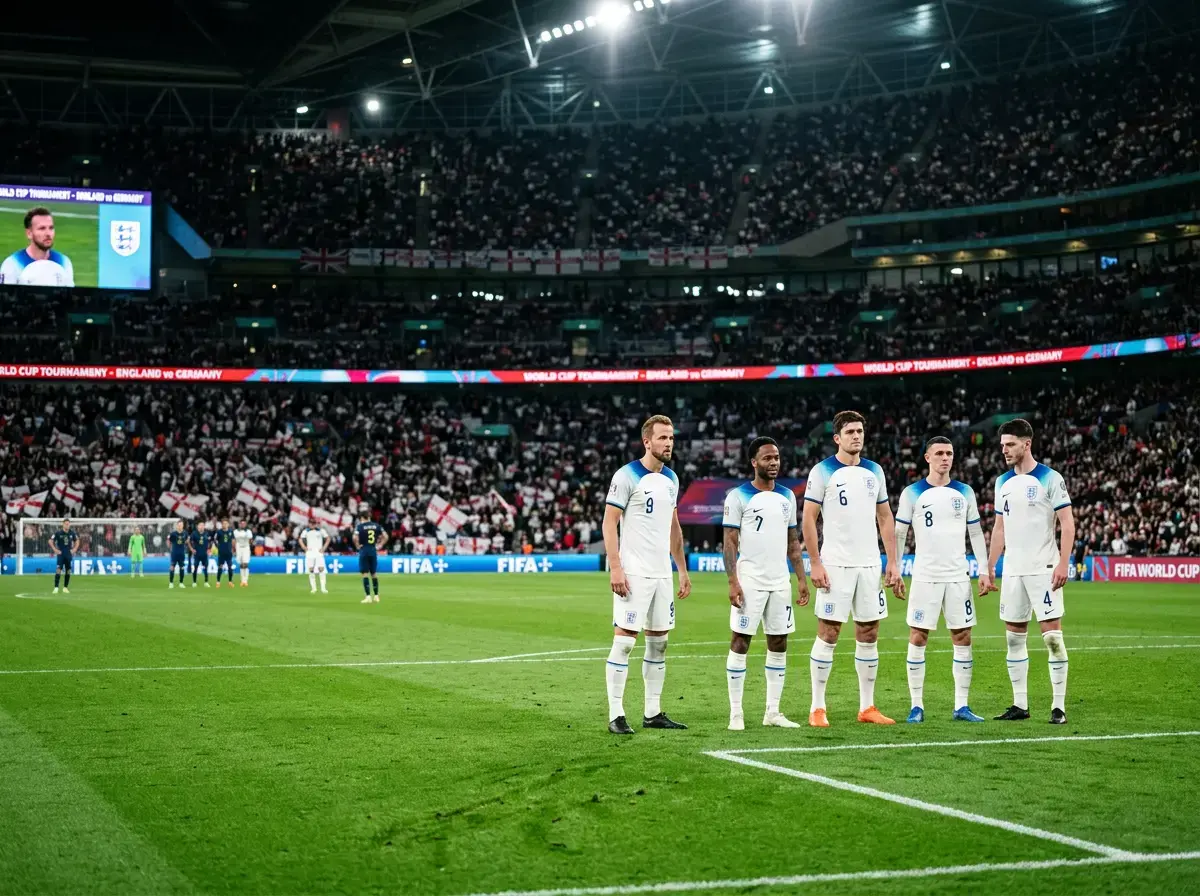
Sixty years. That number hangs over English football like a curse that refuses to lift. Since Bobby Moore lifted the Jules Rimet trophy at Wembley in 1966, England have produced golden generations, suffered penalty heartbreak, and watched inferior sides lift trophies that should have been theirs. The near misses accumulate: Euro 96 at home, the 2018 World Cup semi-final, the Euro 2020 final lost on penalties to Italy, the Euro 2024 final defeat to Spain. Each tournament brings renewed hope and familiar disappointment. Now England arrive in America with arguably their most talented squad since 1966, and the question dominating England World Cup betting markets is whether this generation can finally break the cycle.
The bookmakers rate England among the favourites, with outright odds hovering around 6/1 at most Irish operators. That pricing reflects genuine quality — Jude Bellingham has established himself as one of the world’s elite midfielders, Bukayo Saka provides elite wing play, and the squad depth from goalkeeper to striker exceeds anything England have assembled in the modern era. Yet the odds also incorporate scepticism earned through decades of underperformance. England know how to reach finals; they do not know how to win them.
I approach England World Cup betting with cautious optimism. The talent level demands respect — on paper, this squad ranks alongside Argentina, France, and Brazil as genuine contenders. The managerial situation has evolved since Gareth Southgate’s departure, with the new regime bringing fresh tactical ideas that address the conservative tendencies that frustrated supporters. Group L offers a navigable path to the knockout rounds, and the bracket could open favourably from there. My verdict places England as live contenders at 6/1, though the historical pattern of semi-final exits tempers my enthusiasm. The value exists, but the psychological barriers remain formidable.
Golden Generation 2.0: Squad Assessment
England’s squad for World Cup 2026 represents the culmination of a decade-long youth development revolution. The Premier League academies that invested heavily in coaching infrastructure have produced a generation of technically proficient players capable of competing with anyone in world football. From Manchester City’s Phil Foden to Arsenal’s Bukayo Saka, from Chelsea’s academy products to Liverpool’s homegrown talents, England now possess depth that previous generations could only envy.
Jordan Pickford remains the first-choice goalkeeper, his Everton performances proving more consistent than critics acknowledge. His distribution allows England to play out from the back, while his shot-stopping in tournament football has been largely reliable — the penalty shootout heroics against Colombia in 2018 and Switzerland at Euro 2024 demonstrate his ability to rise to moments of pressure. Behind him, Aaron Ramsdale and Dean Henderson provide quality backup options.
The defensive line has matured significantly since the Euro 2020 campaign. John Stones brings composure and ball-playing ability from his Manchester City education, while Marc Guéhi has emerged as a genuine partner capable of leading the backline. Kyle Walker’s pace on the right provides security even when England push forward aggressively, and his experience of big matches under Pep Guardiola translates to international tournament settings. On the left, Luke Shaw remains first choice when fit, with Kieran Trippier offering versatility across both flanks.
Midfield is where England’s generational talent concentrates. Jude Bellingham has transcended the category of promising youngster to become a genuine Ballon d’Or contender. His performances for Real Madrid — 23 goals and 14 assists in his debut season — demonstrated that he can dominate at the highest level. For England, Bellingham operates as the primary creative force, arriving late in the box with the timing of a natural goalscorer while also contributing defensively when required. Alongside him, Declan Rice provides the screening presence that allows Bellingham to push forward, his West Ham and Arsenal experience making him comfortable in both defensive and progressive roles.
The attacking options present an embarrassment of riches. Bukayo Saka has established himself as one of the world’s premier wide players, his directness and end product from the right wing creating chances that other attackers finish. Phil Foden adds creativity from the left or central positions, his intelligence and technical quality complementing Saka’s more explosive approach. Harry Kane continues to lead the line despite his advancing years, his movement and finishing ability making him England’s primary goal threat. Cole Palmer emerged as the breakout star of the 2024-25 season, his fearlessness and set-piece quality adding another dimension to England’s attack.
Group L Preview: England’s Path
England’s group draw produced a manageable set of opponents that should facilitate comfortable qualification. Group L contains Ghana, Panama, and one additional team to be confirmed — none of whom possess the quality to trouble a fully-fit England squad. The danger lies in complacency rather than genuine competitive threat.
Ghana represent the most credible opposition, their African football tradition producing technically gifted players capable of individual brilliance. The Black Stars qualified through a competitive CAF campaign, demonstrating the organisation and spirit that African teams increasingly bring to major tournaments. Players like Thomas Partey and Mohammed Kudus offer genuine quality in midfield, while the forward line possesses pace that could exploit any defensive lapses. I expect England to win this match 2-0 or 3-1, with Ghana providing more resistance than the gulf in FIFA rankings suggests.
Panama return to the World Cup having impressed in CONCACAF qualification. Their compact defensive approach will frustrate England for periods, but the technical gap should eventually tell. This is the type of match where England historically struggle — opponents sitting deep, requiring patience and precision to unlock. The scoreline may be tighter than expected, perhaps 1-0 or 2-0, with England dominating possession without converting their superiority into emphatic victory. The key for England lies in moving the ball quickly enough to prevent Panama from establishing their defensive shape, creating overloads on the flanks where Walker and Shaw can deliver into dangerous areas.
The group should yield maximum points regardless of the opposition quality. England’s squad depth allows rotation without significant quality drop-off, meaning key players can be rested against weaker opponents while maintaining winning momentum. Finishing as group winners places England in a favourable bracket position, likely facing a third-placed team from Groups I, J, or K in the Round of 32. The path to the quarter-finals looks navigable, with genuine tests only arriving in the later knockout rounds. This gentle introduction to the tournament could prove crucial in building confidence and momentum before the matches that actually determine England’s fate.
Key Players: Bellingham, Saka & The New Guard
Jude Bellingham carries English hopes with the same weight that previous generations placed on Beckham, Rooney, and Lampard. At 22, he has already achieved more at club level than most players manage in entire careers — La Liga title, Champions League trophy, multiple individual awards. His ability to influence matches from midfield positions makes him England’s most valuable player, the one opponent game plans must account for specifically.
What separates Bellingham from other talented midfielders is his combination of technical quality and physical presence. He wins aerial duels against centre-backs, covers ground defensively with the intensity of a traditional box-to-box player, and finishes chances with the composure of a natural striker. For England, this versatility allows tactical flexibility — Bellingham can operate as a number ten, a number eight, or even a second striker depending on match requirements. His partnership with Rice has developed into one of international football’s most effective midfield combinations.
Bukayo Saka provides the width and directness that England require to break down organised defences. His ability to beat defenders one-on-one creates space for teammates, while his crossing and shooting accuracy make him a genuine goal threat from wide positions. The Arsenal winger has matured significantly since his penalty miss in the Euro 2020 final, channelling that disappointment into improved performances rather than allowing it to define his international career. In qualification, Saka contributed eight goals and six assists — numbers that reflect his status as England’s most productive wide player.
Harry Kane’s continued excellence defies the predictions of those who expected decline. At 32, he remains one of the world’s most clinical finishers, his movement and first-touch allowing him to score from minimal service. The Bayern Munich striker adapted seamlessly to Bundesliga football, winning the Golden Boot in his debut season with 36 league goals. For England, Kane represents reliability — he will score, he will create chances for others, and he will lead by example when matches require character. His 65 international goals make him England’s all-time leading scorer, and he shows no sign of slowing.
Phil Foden and Cole Palmer offer contrasting options in the spaces between midfield and attack. Foden’s intelligence and positioning allow him to find pockets of space that opponents cannot track, while Palmer’s confidence and set-piece quality provide match-winning potential from the bench or in specific tactical situations. The competition for starting positions pushes each player to higher levels, creating a positive dynamic that benefits the squad collectively.
The squad depth extends beyond the obvious stars. Trent Alexander-Arnold offers an alternative at right-back with superior passing range, his ability to dictate tempo from deep positions providing tactical flexibility. Anthony Gordon has emerged as a genuine option on the left wing, his directness and work rate complementing Foden’s more intricate approach. In midfield, Kobbie Mainoo represents the next generation, his composure and technical quality earning senior minutes despite his youth. This depth allows rotation without significant quality drop-off — a luxury that English managers have not always enjoyed in major tournaments.
Tournament History: So Close, So Often
England’s tournament record since 1966 reads like a catalogue of heartbreak. The near misses accumulate: Maradona’s Hand of God in 1986, Gazza’s tears in 1990, penalty shootout defeats that blur into a single traumatic memory. Yet the pattern also reveals a team capable of reaching the later stages — England have reached at least the quarter-finals in four of their last five major tournaments. The problem is not getting there; it is taking the final step.
The Southgate era produced consistent progress without ultimate reward. His conservative approach earned criticism for leaving attacking talents on the bench while protecting narrow leads, but the results spoke for themselves: semi-final in 2018, final in 2020, quarter-final in 2022, final again in 2024. Each tournament brought England closer to glory before falling at the final hurdle. The psychological scars from these defeats — particularly the penalty shootout losses — weigh on players who experienced them firsthand.
The managerial transition following Euro 2024 represents an attempt to evolve without abandoning the foundations Southgate built. The new coaching staff brings fresh tactical ideas, particularly in attacking phases where England previously appeared cautious. Pre-tournament friendlies have shown a more aggressive pressing approach and greater willingness to commit players forward in attacking transitions. Whether this evolution translates to tournament football remains to be seen.
The tactical shift addresses the primary criticism of England’s recent tournament performances: an unwillingness to take risks when leading. Under Southgate, England often retreated into defensive shapes after scoring, inviting pressure rather than extending leads. The new approach emphasises maintaining attacking intent regardless of scoreline, trusting the squad’s quality to outscore opponents rather than merely containing them. This philosophical change could prove decisive in knockout matches where conservative tactics have historically failed at crucial moments. The transition demands that players adapt their instincts, which typically requires multiple competitive fixtures to embed fully.
Historical precedent suggests England perform better on neutral ground than at home tournaments. The weight of expectation at Euro 96 and Euro 2020 arguably contributed to their failures, while the 2018 World Cup in Russia produced England’s best performance in decades. America offers neutrality — English supporters will travel in numbers, but the pressure differs from playing knockout matches at Wembley. This environmental factor could work in England’s favour, allowing players to express themselves without the suffocating expectation that accompanies home tournaments. The American time zones also provide some insulation from the constant media scrutiny that affects England players during European competitions.
Betting Analysis: Value in England?
England at 6/1 for outright victory implies approximately 14% probability, placing them among the top tier of contenders behind Argentina, Brazil, and France. This pricing feels accurate given squad quality and historical tournament record. The value question centres on whether this specific squad can transcend the psychological barriers that have defeated previous generations.
My value rating for England outright sits at 6/10. The talent level justifies the odds, but the consistent pattern of semi-final or final exits suggests that backing England requires faith in psychological transformation rather than just tactical or personnel improvement. I would not discourage outright bets at 6/1, but I would recommend modest stakes given the historical headwinds.
England to reach the semi-finals offers better risk-reward at approximately 11/8. This captures England’s genuine quality while acknowledging their proven ability to reach the later stages. My value rating here rises to 7/10 — the path through Group L and the early knockout rounds should be navigable, with the semi-final representing where England traditionally stumble. Backing them to get there makes more sense than backing them to win outright.
Individual player markets provide interesting angles. Bellingham to score in the tournament is available at around 4/9 — near-certainty given his goal threat from midfield positions. The odds offer little value, but the probability of success approaches 90%. For better returns, consider Bellingham as England’s top scorer at approximately 3/1, which offers genuine value given his goal record and advanced positioning in the current system.
Harry Kane for Golden Boot is available at 7/1, which I rate 6/10 for value. Kane’s finishing ability and England’s likely high-scoring matches against weaker group opponents could see him accumulate goals quickly. The competition from Mbappé, Vinícius, and Messi keeps the odds attractive, while Kane’s pedigree in tournament football — five goals at the 2018 World Cup — suggests he can contend. A small each-way bet offers entertainment value throughout the tournament.
Team totals provide another avenue. England over 7.5 tournament goals is available at around 6/5, implying they need to average approximately 2.5 goals across minimum three matches. In recent tournaments, England have averaged 2.1 goals per match — slightly below this line but within range if they progress deep into the knockouts. I rate this 5/10 — a borderline proposition that depends heavily on England’s knockout progress. The group-stage fixtures against Ghana and Panama should yield multiple goals, but knockout matches against elite defences typically produce tighter scorelines that drag down the average.
The clean sheet market deserves consideration for specific matches. England to keep a clean sheet against Panama is available at approximately 8/13, which I rate 7/10 for value. Pickford’s tournament record is excellent, and Panama’s attack lacks the quality to consistently trouble a defence marshalled by Stones and Guéhi. Similar logic applies to the Ghana fixture, though the African side possess more individual talent capable of moments that unlock organised defences.
My Verdict: Is This Finally Their Year?
England possess the squad quality to win World Cup 2026. That statement is objectively true and requires no qualification. Bellingham, Saka, Kane, Rice, Foden: these are elite players competing at the peak of their powers, supported by depth that exceeds any previous England squad. The group draw facilitates comfortable qualification, and the bracket could open favourably through the knockout rounds. All the ingredients exist for English success.
Yet I cannot ignore the historical pattern. England have reached the semi-finals or finals in three of their last four major tournaments without winning any of them. The psychological barriers — penalty shootout trauma, pressure of expectation, whatever indefinable quality separates winners from nearly-men — remain in place until proven otherwise. This squad must demonstrate they can take the final step before I can recommend heavy stakes at 6/1.
My prediction places England in the semi-finals, where I expect them to face either Argentina or Brazil in a match that could define the tournament. Whether they progress depends on margins that cannot be predicted: individual moments of brilliance, refereeing decisions, penalty shootout fortune. What I can say with confidence is that England will be competitive at every stage. They will not embarrass themselves or their supporters.
For betting purposes, I recommend England to reach the semi-finals at 11/8 as the primary wager. This captures their quality while acknowledging the historical reality that getting there has never been their problem. Supplement with Bellingham as England’s top scorer at 3/1 for those seeking individual player exposure. And approach outright bets at 6/1 with appropriate caution — the value exists, but so does the risk of another agonising near miss.