

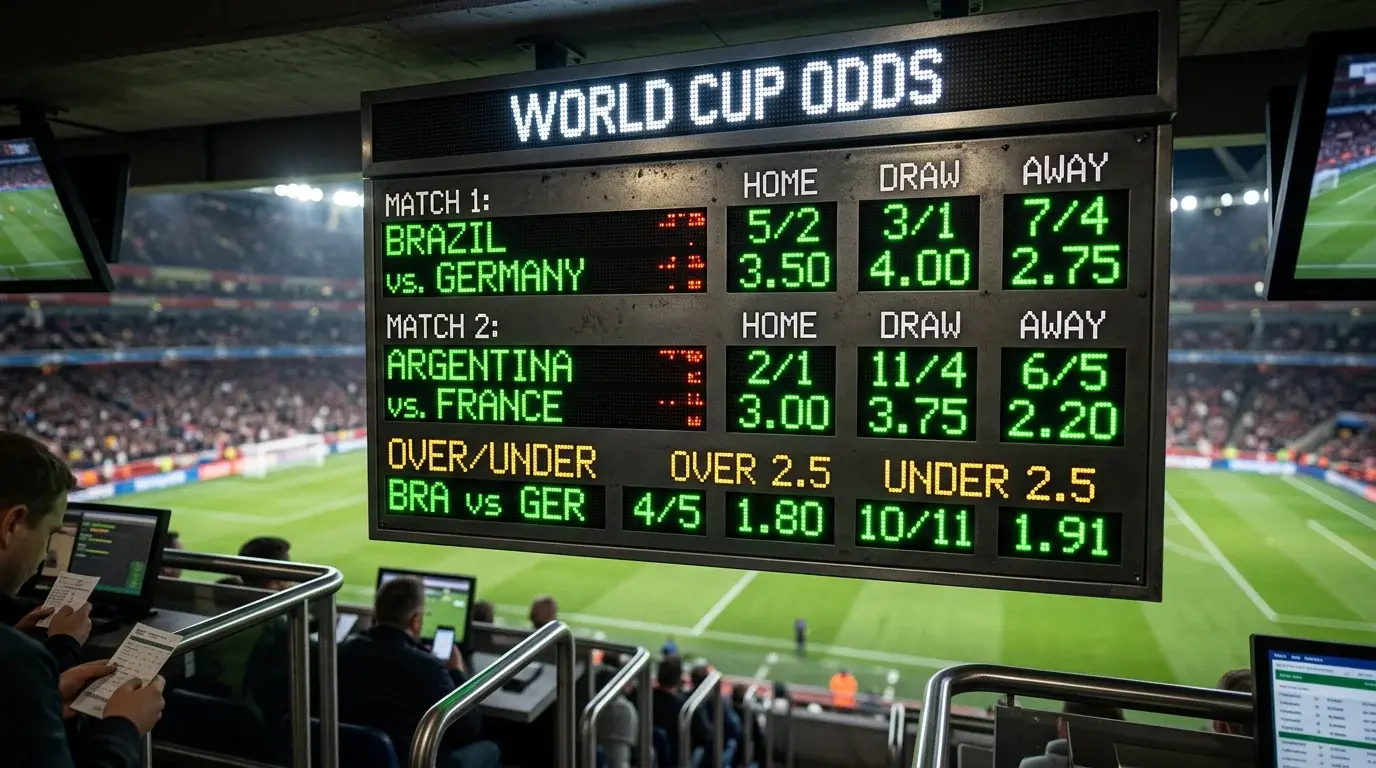
I placed my first World Cup special bet in 2014 on the colour of Neymar’s headband during the opening ceremony. Yellow paid 6/1. He wore white. That loss taught me nothing about football and everything about how bookmakers price entertainment markets: they know you are betting for fun, and they adjust margins accordingly. Special bets function as entertainment products rather than analytical opportunities, yet within this category, meaningful distinctions exist between markets that occasionally offer genuine value and those designed purely to extract recreational stakes.
World Cup special bets encompass everything outside standard match outcomes and tournament winners. Total goals, total cards, specific player props, nationality of the winning goal scorer, method of elimination for specific teams, and dozens of creative propositions that bookmakers release to capture casual interest during the tournament window. The 2026 edition will produce more special markets than any previous World Cup simply because 104 matches across 48 teams creates exponentially more betting propositions. This guide ranks the special categories by value potential and identifies which novelty bets deserve consideration beyond pure entertainment.
Tournament Total Markets
Tournament total goals, cards, and corners represent the special markets where analytical methods can generate edge. Unlike individual player props that depend on specific circumstances, tournament totals aggregate across 104 matches in patterns that historical data illuminates meaningfully.
Total tournament goals markets typically set lines around 165-180 goals for 48-team World Cups based on projection from the 32-team format. The 2022 World Cup produced 172 goals across 64 matches, averaging 2.69 per game. Scaling to 104 matches at similar rates suggests approximately 280 goals for the 2026 tournament. Initial bookmaker lines will establish over/under thresholds that reflect their models; your edge comes from identifying whether structural factors specific to 2026 push actual totals above or below that projection.
Several factors suggest goal inflation for 2026. Group stage matches against expanded qualification pools include more mismatches: Haiti facing Brazil, Curaçao facing Germany, Cape Verde facing Spain. These fixtures historically produce lopsided scorelines that inflate totals beyond evenly-matched encounters. The additional Round of 32 knockout round adds matches but typically at lower per-game goal rates than group play. My assessment weights group stage inflation more heavily than knockout suppression, suggesting over tournament goal totals carries marginal value at typical market lines.
Tournament total cards markets follow similar analytical logic. World Cup cards per match average approximately 3.8 across recent tournaments, though variation exists based on referee selection and general tournament physicality. The expanded format introduces more matches between teams from different confederations who may interpret physical play differently, historically producing elevated card rates compared to within-confederation matches. Backing over total cards carries speculative value if bookmaker lines assume card rates from previous tournaments without adjusting for expanded format dynamics.
I rate tournament total markets 7/10 for value potential. They require genuine analysis rather than guesswork, reward understanding of structural tournament factors, and typically carry lower margins than individual player props. The weakness involves long settlement periods: stakes lock until the tournament concludes on July 19th, representing over five weeks of capital commitment for single bets.
Player Prop Markets
Individual player propositions range from sensible analytical exercises to pure gambling products with embedded margins exceeding 20%. Distinguishing between these categories determines whether player props warrant serious consideration or purely entertainment stakes.
Player to score anytime during tournament markets deserve analytical attention. These markets price the probability that specific players record at least one goal across all their team’s matches. For strikers from nations expected to reach knockout rounds, the probabilities compound attractively. Kylian Mbappé at 1/20 to score anytime implies the bookmaker sees approximately 95% probability he scores at least once. That pricing feels accurate given France’s expected six or seven matches. Value exists in the mid-range: players like Darwin Núñez at 1/5 to score anytime may underprice Uruguay’s expected four to five matches and his central striker role.
Specific goal total markets for individual players carry higher margins and more uncertainty. Mbappé to score over 4.5 goals at 7/4 requires exceptional performance beyond his already strong expected contribution. These markets essentially ask you to predict outlier performance rather than baseline probability. Unless your assessment of specific players dramatically exceeds market consensus, these props offer negative expected value across reasonable sample sizes.
First goal of tournament markets represent pure entertainment. Identifying which player scores the opening goal from potentially 96 starters across the tournament opener involves probability below 1% for any individual. Prices of 50/1 or 100/1 seem attractive but carry implied probabilities well below the overround embedded in the market. I avoid these entirely unless the entertainment value justifies stakes you would otherwise spend on lottery tickets.
Player props as a category rate 5/10. The analytically sound markets get priced efficiently because bookmakers understand their exposure. The entertainment markets carry margins that render value impossible. The middle ground offers occasional opportunities for punters with strong conviction about specific players, but systematic edge remains elusive.
Nationality and Regional Markets
Markets pricing outcomes by national or regional categories produce interesting dynamics that standard team markets cannot capture. Which confederation produces the winner, nationality of the Golden Boot winner, and European versus South American finals matchups create aggregated probabilities that sometimes misprice constituent possibilities.
UEFA nations to win the World Cup typically prices around 4/7 based on historical dominance and current squad quality across European nations. CONMEBOL at 6/4 reflects Argentina’s defending champion status and Brazil’s consistent contention. These confederation markets aggregate team-level probabilities, meaning your edge depends on whether the sum of team-level assessments differs from the confederation-level market price. If you believe Brazil, Argentina, and Uruguay collectively carry higher combined probability than their confederation price implies, the CONMEBOL market offers value.
First African nation to qualify from groups, first Asian nation to win a knockout match, and similar regional firsts create markets that reward familiarity with qualifying performances beyond headline nations. Morocco’s 2022 run demonstrated African football’s World Cup capability in ways that pricing for first African semi-finalist may now reflect. Japan’s victories over Germany and Spain similarly adjusted perceptions of Asian football. Historical prices that assumed European and South American dominance have begun incorporating these demonstrated capabilities, compressing value that existed in previous tournaments.
I rate nationality and regional markets 6/10. They reward broad football knowledge across confederations that casual punters often lack. The margins run lower than pure entertainment props because bookmakers face analytical pricing rather than entertainment pricing. However, the value opportunities that existed before Africa and Asia demonstrated World Cup competitiveness have largely been priced away by market adjustment.
Method and Timing Markets
How and when outcomes occur creates proposition categories that bookmakers price based on historical patterns. Tournament to produce a final decided by penalties, total matches decided by extra time, and similar structural markets rely on base rate analysis that genuine research can inform.
Final to go to penalties markets typically price around 7/2, implying approximately 22% probability. Historical data shows three of the last ten World Cup finals required penalties for resolution. That 30% base rate suggests value on “yes” at current typical prices, though small sample size limits confidence. The emotional appeal of penalties, especially for casual bettors who remember specific dramatic finals, may inflate “no” backing and create value on the less narratively compelling outcome.
Total matches to finish 0-0 markets aggregate across all 104 fixtures. Historical World Cup scoreless draw rates sit around 7-8% of matches. For 2026, that suggests approximately seven to nine 0-0 results. Bookmaker lines around 6.5 or 7.5 create over/under propositions where historical base rates inform analytical assessment. The expanded format’s inclusion of weaker nations paradoxically may reduce scoreless draws: mismatches produce goals rather than stalemates, while competitive matches between quality opposition generate the tactical caution that produces goalless outcomes.
First red card of tournament and similar “first” markets carry timing elements that complicate analysis. Red cards occur in roughly 3% of World Cup matches historically, meaning the tournament opener between Mexico and South Africa has approximately 6% probability of producing a red card. Markets pricing specific players or specific matches for first red card combine low base rate events with individual unpredictability, producing negative expected value even when prices appear attractive.
Method and timing markets rate 6/10 overall. Historical data informs analysis meaningfully for tournament-wide aggregates. Individual match or player-specific timing props carry margins that eliminate value despite analytical approaches. Focusing on over/under lines for tournament-wide totals provides the best value within this category.
Entertainment-Only Markets
Some special markets exist purely to capture recreational stakes during tournament excitement. These products deserve acknowledgment as entertainment expenses rather than analytical betting opportunities. Staking on them should use funds allocated to entertainment budgets, not serious betting bankrolls.
Meme markets pricing viral moments, specific celebrations, or commentary phrases fall entirely into entertainment territory. Will a player do a specific celebration, will the commentator say a specific phrase, will the tournament mascot appear on pitch during a specific match. These markets carry margins that start at 30% and extend beyond 50% for the most creative propositions. The entertainment value exists, the betting value does not.
Long-range specificity markets asking you to predict specific scorelines across multiple matches, exact elimination round for specific teams, or precise player statistics across the tournament compound uncertainties in ways that make mathematical value impossible. A 500/1 price on a specific four-team final pairing might seem attractive until you calculate the implied probability versus realistic assessment. These markets function as lottery products with football packaging.
I recommend allocating no more than 5% of your total World Cup betting budget to entertainment markets if you find them genuinely enjoyable. View this allocation as recreation spending rather than analytical betting. The fun of holding a ticket on a creative proposition may justify small stakes; expecting profit from this category reflects misunderstanding of how bookmakers price entertainment products.
My Special Bets Strategy
Across all special market categories, I concentrate serious stakes only where historical data provides analytical foundation. Tournament total goals over the established line, tournament total cards if structural factors suggest inflation, and confederation winner markets where team-level assessments aggregate to different probabilities than market pricing. These three categories permit genuine analysis rather than speculation or entertainment.
Player props receive small stakes only for specific players whose tournament role I have analysed intensively. Scott McTominay to score anytime at 6/4 intrigues me given Scotland’s expected four to five matches and his goal involvement rate during qualifying. This represents a considered analytical position rather than random selection, justifying stake allocation that pure entertainment props would not receive.
Entertainment markets receive the 5% entertainment allocation distributed across propositions that maximise enjoyment potential. If a specific outcome would enhance watching the tournament, staking small amounts creates rooting interest that entertainment value justifies. The moment you expect profit from these markets, you have misunderstood their purpose and pricing.
The World Cup special bets landscape rewards discrimination between analytical opportunities and entertainment products. Most casual punters treat the entire category as a lucky dip, staking randomly on creative propositions that bookmakers have priced to guarantee profit regardless of outcome. By identifying the analytical subset, specifically tournament aggregates and confederation markets, you can engage special bets productively while enjoying entertainment props for what they actually represent: premium-priced fun rather than value betting opportunities.
