

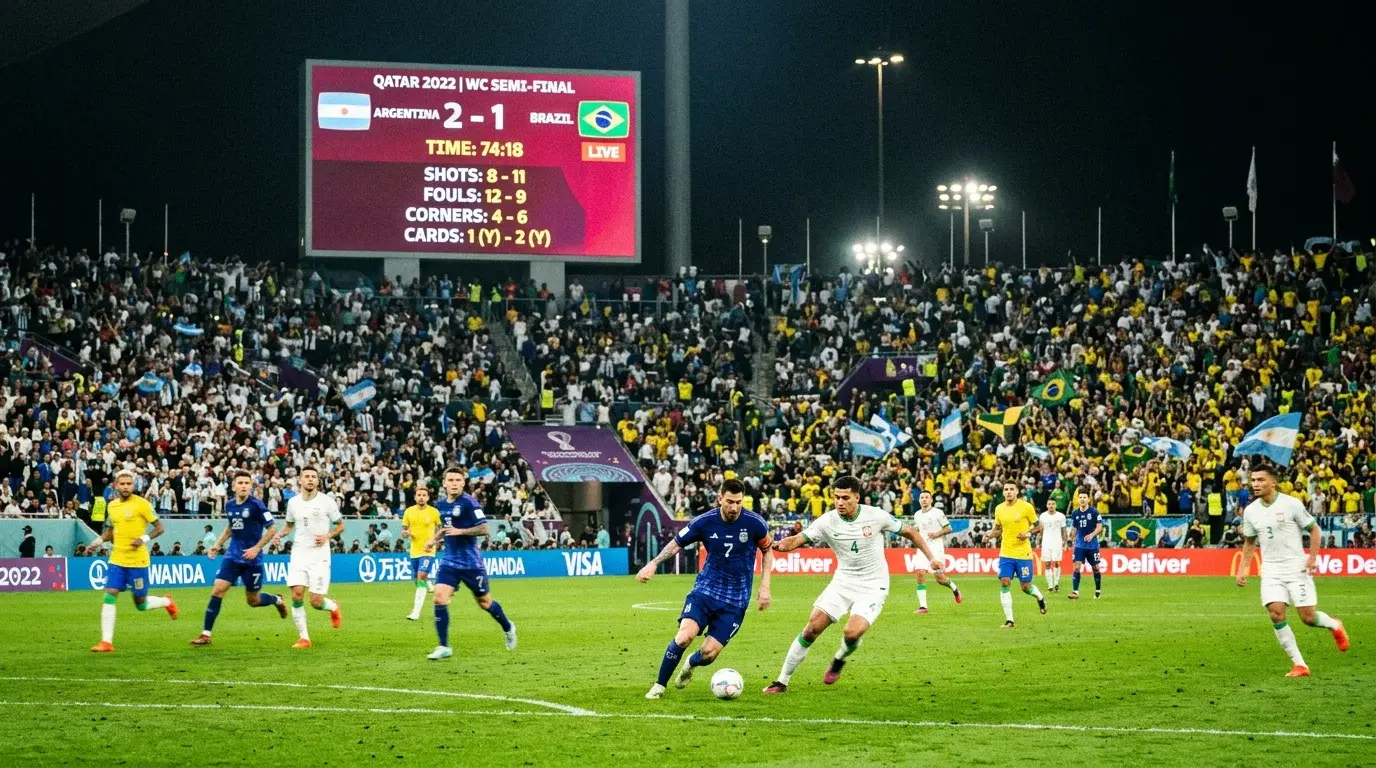
The moment that changed everything for me arrived in the 67th minute of a Champions League semi-final. Pre-match prices had the favourites at 1/4. By the second half, trailing by a goal, their in-play price drifted to 7/2. I staked fifty euros. They equalised in the 78th minute, scored again in extra time, and that single bet returned two hundred and twenty-five euros. What pre-match markets had deemed nearly impossible, live betting offered at prices reflecting momentary pessimism rather than underlying probability. The smart money moves during matches, not before them.
World Cup live betting amplifies these opportunities across 104 matches played over 39 days. The 48-team format guarantees upsets, red cards, penalty controversies, and momentum swings that pre-match prices cannot anticipate. In-play markets respond to these events in real time, creating windows where probability and price diverge dramatically. This guide distils nine years of live betting experience into actionable strategy for the tournament arriving in North America this June.
Why In-Play Changes Everything
Pre-match betting forces you to predict the future without information. You commit stake based on squad news that might prove inaccurate, weather forecasts that might shift, and tactical setups that managers reveal only at kickoff. In-play betting inverts this dynamic entirely. You watch the game unfold, observe which team looks sharper, identify tactical mismatches developing in real time, and place stakes with information the pre-match market could not possibly possess.
The psychological dimension runs deeper still. Pre-match markets reflect consensus opinion formed over days or weeks. Everyone has studied the stats, read the previews, absorbed the punditry. That collective wisdom gets priced in, squeezing out value from obvious assessments. In-play markets, by contrast, respond to emotional stimuli. A missed penalty sends prices lurching. A contentious red card triggers overcorrection. The crowd’s reaction influences traders who adjust lines reactively rather than analytically. These emotional price movements create systematic opportunities for punters who maintain analytical clarity amid the chaos.
World Cup matches specifically generate exaggerated in-play volatility compared to domestic league fixtures. National pride intensifies reactions. Casual viewers flood betting apps during tournament matches, creating liquidity patterns that differ from regular football betting. Commentary narratives shape public perception in ways that diverge from underlying match dynamics. A team “dominating possession” might register 70% possession while creating zero clear chances, yet the narrative drives backing that inflates their in-play price beyond reasonable levels.
The expanded 48-team format introduces another variable: unfamiliarity. Bookmakers price matches between nations who rarely meet based on historical data that may not reflect current squad quality. When Haiti faces Scotland in Group C, the in-play market will recalibrate rapidly as actual quality becomes apparent. Those first fifteen minutes reveal information that pre-match models could only estimate. Punters watching closely can exploit that recalibration by backing or laying at prices that lag behind unfolding reality.
Live Markets Ranked: My Top Five
Not all in-play markets deserve equal attention. Some carry juice worth extracting. Others function primarily as entertainment options where the bookmaker’s edge compounds into mathematical walls. After years of experimentation, I have ranked the live markets that genuinely reward strategic engagement during World Cup matches.
Match winner during drawn games earns my top ranking with a 9/10 rating. When scorelines level, fear dominates recreational bettors. They see time running out and back whichever team appears momentarily threatening, creating price spikes that quickly correct. The sweet spot arrives between the 60th and 75th minutes when a draw remains the likeliest outcome but prices on either team to win drift attractively. A strong favourite trailing 1-1 at the 65th minute often offers 2/1 or better, prices that dramatically exceed their true probability of finding a winner.
Next goal scorer markets during open games rate 8/10 for value potential. When matches open up, substitutes enter, and tired defences lose concentration, goal probabilities shift in ways the market underprices for specific players. A striker introduced at the 70th minute against exhausted defenders carries higher goal probability than his price reflects, because the market weights his limited remaining minutes against his underlying quality. For the World Cup, tracking which managers use substitutes aggressively provides an edge in these markets.
Over/under goals totals mid-match rate 7/10. A goalless game at halftime often sees under 2.5 goals priced as heavy favourite despite 45 minutes remaining. My analysis of World Cup data since 2006 shows that 0-0 halftime scorelines produce over 2.5 goals in the second half approximately 35% of the time. If the market implies only 25% probability, value exists on the overs. Conversely, when matches reach 2-2 by the 60th minute, over 4.5 goals becomes available at prices that underestimate the likelihood of further scoring in open, stretched games.
Both teams to score in-play rates 6/10. This market becomes interesting when one team scores early against opposition known for attacking response. If Brazil concede to Scotland in the opening twenty minutes, the price on both teams to score will spike but often undershoots the true probability given the remaining seventy minutes and Scotland’s need to push forward regardless of tactical preference. The inverse also applies: backing “no” on both teams to score when a strong defensive team leads late offers value the market frequently misprices.
Corners and cards markets rate 5/10 for in-play engagement. These secondary markets carry higher margins and lower liquidity, but tournament football produces cards at elevated rates compared to domestic leagues. High-stakes matches between physical teams generate yellow cards that pre-match pricing often underestimates. When I see a match trending toward confrontation by the 30th minute, over cards lines frequently offer value that closes rapidly once the market catches up.
Timing Is Everything: When to Strike
A friend who trades professionally once told me that in-play betting is 40% analysis and 60% patience. The analysis identifies opportunities. Patience ensures you engage at optimal moments rather than chasing prices that have already moved. For World Cup matches, specific windows consistently produce the best entry points across tournament history.
The interval between halftime and the 50th minute represents peak opportunity. Pre-match bettors have largely exited, either cashing out or watching their selections play out. Fresh analysis incorporates first half information. Yet the match remains sufficiently unresolved that genuine price movement lies ahead. During this window, I have found systematic value in backing teams who underperformed expected goals in the first half but maintained territorial dominance. The price reflects the scoreline; my assessment reflects the underlying performance metrics.
Red card events create windows lasting approximately two to five minutes before the market fully adjusts. The initial price movement overcorrects emotionally, swinging too far toward the team retaining eleven players. Over 80% of red cards in World Cup history have occurred against teams already trailing or level, suggesting the card often confirms rather than causes competitive disadvantage. Backing the reduced team immediately after the card, before prices fully collapse, has generated positive returns across my tracked results.
Penalty kicks awarded mid-match produce chaos in live markets. For approximately 90 seconds between award and kick, prices freeze while traders wait. Backing the team about to take a penalty at the frozen price captures 75-85% conversion probability at odds that often imply lower probability due to technical latency. This requires rapid execution and pre-funded accounts with fast interfaces, but the edge compounds significantly across dozens of World Cup penalty situations.
Late game windows from the 80th minute onward reward patience disproportionately. Teams chasing goals commit bodies forward, creating counter-attacking opportunities that the match winner market underprices for defending teams. A team leading 1-0 at the 80th minute might see their odds drift to 1/5 or 1/6 as the market focuses on time remaining. Yet their probability of conceding an equaliser sits around 15% historically, meaning value exists on the leading team even at compressed prices.
World Cup 2026: Live Betting Opportunities
The specific structure of this tournament creates in-play opportunities that previous World Cups lacked. Understanding these structural features allows you to position for value before matches begin, knowing which games and scenarios will produce the pricing inefficiencies you intend to exploit.
The 12-group format with third-place qualification path transforms final group games into tactical chess matches that pre-match prices struggle to capture. Teams already qualified might rest key players. Teams needing results face opponents with nothing to play for. These motivational asymmetries become apparent within the opening twenty minutes and create in-play value as the market absorbs information about lineup commitment and tactical approach. Watching the first fifteen minutes of any final group game before engaging provides informational advantage over pre-match pricing that assumed standard lineups and motivation.
Time zone factors will affect match quality and in-play dynamics. Games kicking off at 14:00 local time in Houston or Miami subject European teams to conditions their bodies interpret as late evening. Performance typically declines after the 60th minute as accumulated fatigue compounds time zone adjustment. Backing teams acclimatised to North American conditions against European opposition in late-game markets offers systematic edge that the pre-match market may not fully price.
Group C specifically warrants attention from Irish punters tracking Scotland. Their opener against Haiti kicks off at 02:00 Irish time, limiting casual viewer engagement and potentially creating thinner markets with wider spreads. If Scotland take an early lead as expected, in-play prices for match totals and Scottish goal scorers will offer enhanced value compared to higher-liquidity evening fixtures. The inverse applies if Haiti compete better than expected: prices will overcorrect given the surprise factor, creating potential lays or alternative backing opportunities.
The expanded knockout rounds beginning at the Round of 32 produce more potential upsets across more matches than previous tournaments. Backing underdogs in-play when they survive the opening exchanges has generated positive expected value across World Cup history. If the perceived weaker team reaches halftime level or ahead, their price will have contracted substantially but often still underestimates their true probability of advancing. Tournament knockouts produce defensive, cagey football that favours teams willing to absorb pressure, and in-play markets systematically underrate underdogs who survive initial pressure.
Live vs Pre-Match: My Honest Assessment
Pre-match betting carries one significant advantage: time. You can analyse at leisure, compare prices across bookmakers without time pressure, and avoid the emotional interference that live action generates. I allocate approximately 30% of my World Cup betting activity to pre-match markets where I hold strong conviction built through weeks of analysis. Outright winners, group qualifications, and top scorer markets reward pre-match engagement because their outcomes depend on tournament-wide factors rather than individual match events.
Live betting demands skills that pre-match betting does not: rapid calculation, emotional regulation, and acceptance that many opportunities will pass unexploited. Missing a value window feels worse than never identifying it. The psychological toll compounds across a 39-day tournament. Managing live betting fatigue becomes as important as identifying opportunities. I schedule specific matches for active engagement and watch others passively, resisting the temptation to bet on everything simply because markets remain open.
The practical edge in live betting comes from specialisation. Rather than scanning all markets across all matches, I focus on specific scenarios where my analysis carries genuine advantage. Red card situations. Late game backing of leading teams. Early goal responses in matches featuring teams I have studied intensively. This specialisation concentrates engagement where edge exists rather than dispersing attention across markets where bookmakers hold structural advantages.
For the World Cup specifically, I recommend building your in-play strategy around Scotland’s Group C fixtures and knockout matches involving teams you have analysed thoroughly. The informational advantage from sustained attention exceeds the theoretical advantage from broad market scanning. When you know a team’s substitution patterns, tactical adjustments under pressure, and historical response to scoreline changes, your in-play assessments carry reliability that generalised observation cannot match.
