
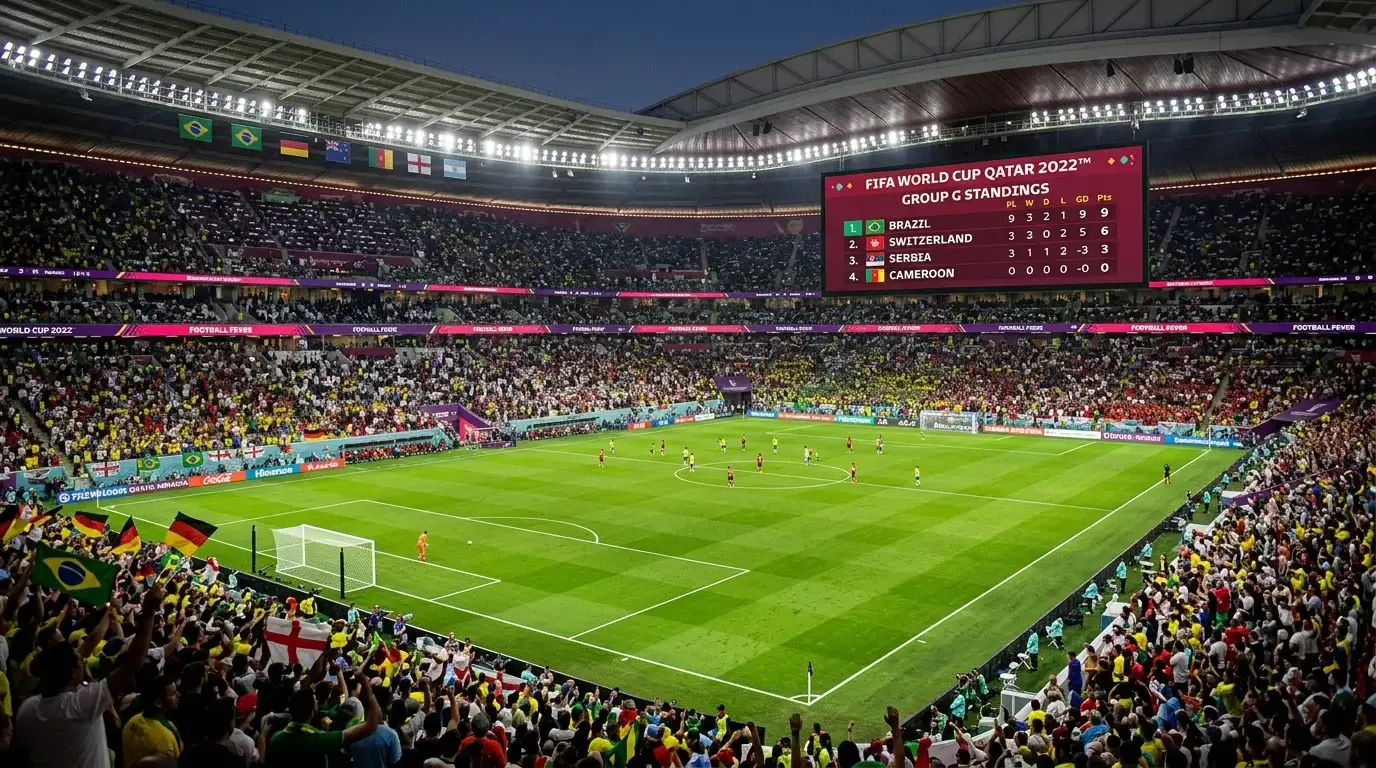
The 2022 World Cup group stage produced Saudi Arabia beating Argentina, Japan beating Germany, and Morocco topping their group ahead of Croatia and Belgium. My pre-tournament group winner bets included Germany in Group E. Confident assessment, historical pedigree, squad quality that seemed obvious. Germany finished third and went home after three matches. That loss taught me something essential about World Cup group stage betting: the markets reflect reputation rather than current form, and reputation diverges from reality more dramatically in tournament settings than anywhere else in football.
World Cup group stage betting offers structural advantages unavailable in other tournament phases. The matches come quickly, the opposition quality varies dramatically, and the markets struggle to price 48 teams who rarely play each other. This guide breaks down how I approach these opening two weeks, where 80% of my World Cup stake allocation concentrates, and why the group phase consistently delivers better value than the knockout drama that captures public attention.
Group Stage Markets Explained
Three primary market types dominate group stage betting, each carrying distinct characteristics that reward different analytical approaches. Understanding which market suits your analytical strengths focuses your attention productively rather than scattering it across options where bookmakers hold structural advantages.
Group winner markets ask you to predict which team finishes top of their group. Prices reflect expected points accumulation weighted by goal difference tiebreakers. A heavy favourite like Brazil at 1/3 in Group C implies the bookmaker sees roughly 75% probability of them topping the group. The value challenge involves identifying groups where the favourite faces genuine risk the market underweights, or where secondary teams carry underpriced chances based on recent form improvements the market has not incorporated. Group winner markets settle once the final group match concludes, meaning your stake locks for approximately twelve days between group draw confirmation and resolution.
Team to qualify markets expand your options by asking simply whether a team progresses, regardless of finishing position. In the 2026 format, the top two teams from each group advance automatically, plus eight best third-placed teams from the twelve groups. This qualification path creates circumstances where a team finishing third still progresses, yet group winner markets pay nothing for second place. Team to qualify markets price this distinction, offering lower prices than group winner for favourites but often better expected value for second-tier nations whose realistic ceiling involves qualification rather than group supremacy.
Correct group order markets ask you to predict the exact finishing positions of all four teams. These accumulate the complexity of predicting four separate outcomes, producing prices that seem attractive at 20/1 or 40/1 but carry implied probabilities that assume near-perfect forecasting ability. I avoid these markets entirely. The additional price does not compensate for the compounded uncertainty, and bookmaker margins on exact order markets typically exceed 130%, meaning roughly 30% of all stakes go to the house regardless of outcomes.
Individual match betting during group play functions identically to domestic league fixtures but carries tournament-specific dynamics. Teams’ approaches vary based on standings, qualification status, and rotation needs. Final group matches particularly produce unusual circumstances: already-qualified teams may rest players, while eliminated teams play freely without consequence. These motivational asymmetries create pricing inefficiencies the market struggles to capture accurately, especially for matches involving teams from different confederations who rarely meet in competitive fixtures.
My Group Stage Approach
My framework prioritises stability indicators over quality indicators when assessing group outcomes. The distinction sounds subtle but fundamentally reorients how I analyse each group. Quality indicators measure how good a team might be at peak performance. Stability indicators measure how reliably they produce consistent performance across multiple tournament matches. World Cup groups demand consistency over three matches against varied opposition. Volatility punishes punters backing talented but inconsistent sides.
Squad depth sits at the core of stability assessment. Teams rotating effectively across three matches in approximately ten days avoid the fatigue-induced collapse that derails single-match quality assessments. I examine squad lists for genuine alternatives at every position, not just headline stars. Brazil’s depth across attacking positions exceeds Argentina’s reliance on Messi and specific combinations. Germany’s midfield options provide tactical flexibility England’s current squad lacks. These depth assessments inform my group winner selections more than comparing starting eleven quality.
Managerial tournament experience receives significant weighting. First-time World Cup managers consistently underperform market expectations across historical data. The pressure environment, media intensity, and player management challenges differ fundamentally from qualification campaigns or domestic league rhythms. Managers who have navigated previous tournaments carry demonstrated capability that newcomers cannot prove until they experience it. Didier Deschamps reaches his fourth World Cup as France manager. Steve Clarke leads Scotland to their first World Cup since 1998. This experience gap affects group stage consistency predictions beyond the squads’ respective quality levels.
Recent form against comparable opposition provides sharper signals than historical reputation. Belgium’s “golden generation” narrative persists despite declining results across recent tournaments. Morocco’s 2022 semi-final run transformed perceptions despite their qualification group containing Croatia and Belgium, teams they defeated. I weight the most recent six to eight competitive matches heavily, discounting friendly fixtures that lack intensity and historical results that predate current squad construction. This recency focus captures form trajectories that reputation-based pricing misses.
Specific matchup dynamics within groups matter more than abstract quality comparisons. Scotland faces Brazil in Group C, a matchup that seems overwhelmingly one-sided until you consider that Scotland’s defensive organisation particularly troubles teams who expect to dominate possession. Steve Clarke’s system forces opponents into predictable patterns that Scottish structure can neutralise. Brazil remains heavy favourites, but the price movement between initial market release and tournament kickoff will depend on how analytical perspectives interpret this specific tactical matchup rather than defaulting to historical stereotypes.
Best Groups for Betting: My Rankings
Ranking all twelve groups by betting attractiveness requires defining what “attractive” means in practical terms. I prioritise groups containing mispricing opportunities where my assessment diverges meaningfully from market consensus. A group of four evenly matched teams produces entertainment but not necessarily betting value. Groups with clear favourite status alongside underpriced qualification chances for second-tier sides generate the edges worth pursuing.
Group C earns my highest rating at 9/10. Brazil’s dominance feels priced appropriately at 1/3 for group winner, but the qualification dynamics create opportunity. Morocco at 2/1 to qualify underprices their proven tournament capability demonstrated through their 2022 run. Scotland at 4/5 to qualify reflects reasonable assessment given their weakest opponent is Haiti and their realistic ambition involves second place or best third. The market prices Group C as though Brazil cruises while the other three scramble unpredictably. My analysis sees Morocco as underpriced given their squad quality and World Cup experience, creating a specific bet worth pursuing.
Group J rates 8.5/10. Argentina’s defence of their World Cup title means deep tournament progression expectations, but their Group J opponents include Algeria, Austria, and Jordan. Austria presents genuine European quality that could trouble Argentina in a specific match despite lower overall squad value. The group winner market prices Argentina at 2/9, implying nearly 82% probability. Austria at 7/1 offers speculative value for an upset given their recent improvement and Euro 2024 progression. The qualification markets provide more interesting angles: all four teams carry distinct probabilities that current prices may misprice.
Group I earns 8/10. France faces Senegal, Norway, and Iraq, generating dynamics that reward specific analysis. Norway’s first World Cup in 28 years with Erling Haaland leading their attack creates market uncertainty. France at 4/11 to win the group prices their quality fairly, but Norway to qualify at 8/13 potentially underprices their genuine ability given Iraq’s expected struggles. Senegal at 6/4 to qualify offers value for believers in their African Cup of Nations pedigree translating to World Cup performance. This group rewards punters who have followed qualifying closely rather than defaulting to reputation.
Group H rates 7.5/10. Spain, Saudi Arabia, Cape Verde, and Uruguay produce fascinating dynamics. Spain’s Euro 2024 triumph positions them as group favourites at 4/9, but Uruguay at 6/4 to win the group offers value given their squad quality and World Cup experience. Saudi Arabia’s 2022 upset of Argentina demonstrated capability that their current price around 4/1 to qualify may underestimate against Cape Verde and potentially competitive matches against Spain and Uruguay. The group contains genuine upset potential without obvious mispricing on favourites.
Group F earns 7/10. Netherlands face Japan, Tunisia, and Sweden in matches that historical data struggles to price given limited recent encounters. Japan’s 2022 victories over Germany and Spain demonstrated quality that their current 9/4 to win the group may underprice. Netherlands at 4/7 feels marginally too short given Japan’s demonstrated ability to defeat European opponents. Tunisia at 7/2 to qualify offers speculative value for African football believers, though their squad depth concerns limit conviction.
Groups A, D, and L rate between 6/10 and 6.5/10. They contain logical favourites whose pricing feels accurate rather than offering divergence opportunities. Mexico hosting Group A, USA hosting Group D, and England in Group L all carry home advantage or quality premiums that pricing reflects appropriately. Value seekers should focus elsewhere unless specific matchup analysis reveals angles the general market ignores.
Groups B, E, G, and K rate 5.5/10 or below. These groups either contain overwhelming favourites whose prices compress alternatives excessively, or they feature four teams of sufficiently similar quality that prediction becomes essentially random. Germany in Group E at 1/4 illustrates the problem: the price implies 80% probability, leaving insufficient value on alternatives while offering minimal return on backing the obvious favourite. These groups function better for individual match betting than outright group winner markets.
When to Place Group Bets
Timing significantly affects available value in group stage markets. Prices shift substantially between initial release, final squad announcements, and tournament kickoff. Understanding these timing dynamics allows strategic stake placement rather than impulsive response to market release.
Initial market release occurs approximately one week after the draw ceremony. These prices reflect bookmaker models based on world rankings, historical performance, and squad composition as currently understood. They do not incorporate final squad selections, injury updates, or form developments from intervening matches. Early prices often contain inefficiencies for teams whose current trajectory diverges from historical assessment. Morocco’s 2022 semi-final run took months to fully price into subsequent markets; similar lag effects will affect 2026 pricing for teams whose qualification form exceeded or underperformed expectations.
Squad announcement windows, typically two to three weeks before the tournament, trigger significant price movement. Key absences devastate group winner prices for teams dependent on specific individuals. Conversely, surprising inclusions or fitness confirmations for previously doubtful players create backing opportunities before prices adjust. I hold 50% of my group stage allocation until squad announcements confirm starting expectations, avoiding the risk of backing teams whose price assumes personnel availability that fails to materialise.
The final 72 hours before tournament kickoff produces the highest liquidity and often represents closing lines that reflect maximum available information. However, these final prices also carry compressed value as market efficiency increases with betting volume. My preferred strategy involves placing 50% of allocation at squad announcement when information edges may exist, then 30% in the final week as prices stabilise, and holding 20% for in-play opportunities during group matches themselves.
Avoid betting immediately after high-profile upsets during the group stage itself. Market overreaction to early results creates apparent value that often proves illusory. When Germany lost to Japan in 2022, Germany’s group winner price collapsed while Japan’s surged. Both movements overcorrected based on single-match evidence rather than sustainable reassessment. The smart approach involves maintaining pre-tournament assessments unless genuinely new information, injuries, tactical revelations, or systemic failures, warrants fundamental revision rather than emotional response.
Group Stage Value Extraction
My conviction for the 2026 World Cup group stage centres on qualification markets rather than group winner markets. The third-place qualification path changes probability distributions in ways the market may not fully price, and qualification provides a lower bar that more accurate teams can clear despite not topping their groups. Specifically, backing Morocco to qualify from Group C at prices around 1/3 captures near-certainty given their quality exceeds Haiti substantially and matches Scotland closely. The price implies roughly 75% probability; my assessment places it closer to 85-88% given their squad, experience, and manageable opposition.
Scotland to qualify at 4/5 represents the single bet I will prioritise for this tournament from an Irish punter’s perspective. Their Celtic connection resonates emotionally, but the analysis supports the selection independently. Beating Haiti should produce three points. Drawing Morocco remains realistic given Scotland’s defensive organisation. Even losing to Brazil leaves qualification achievable through goal difference management. The qualification path expands their routes beyond needing results against Brazil, which the group winner market demands. At 4/5 implying 55.6% probability, my 65-70% assessment creates a value gap worth pursuing.
Group stage betting rewards patience, specificity, and resistance to narrative. The stories that emerge during the tournament will tempt reactive betting on hot teams and against cold ones. Maintain discipline around your pre-tournament analysis. Accept that some groups will produce upsets that seem obvious in hindsight but carried insufficient probability to justify pre-tournament backing. Over 48 teams and 12 groups, your edge compounds through selective engagement with genuine mispricing rather than scattered allocation across every available market. The group stage offers the World Cup’s best betting value precisely because the public focuses on knockout drama, leaving group markets comparatively inefficient for those willing to do the analytical work.
