

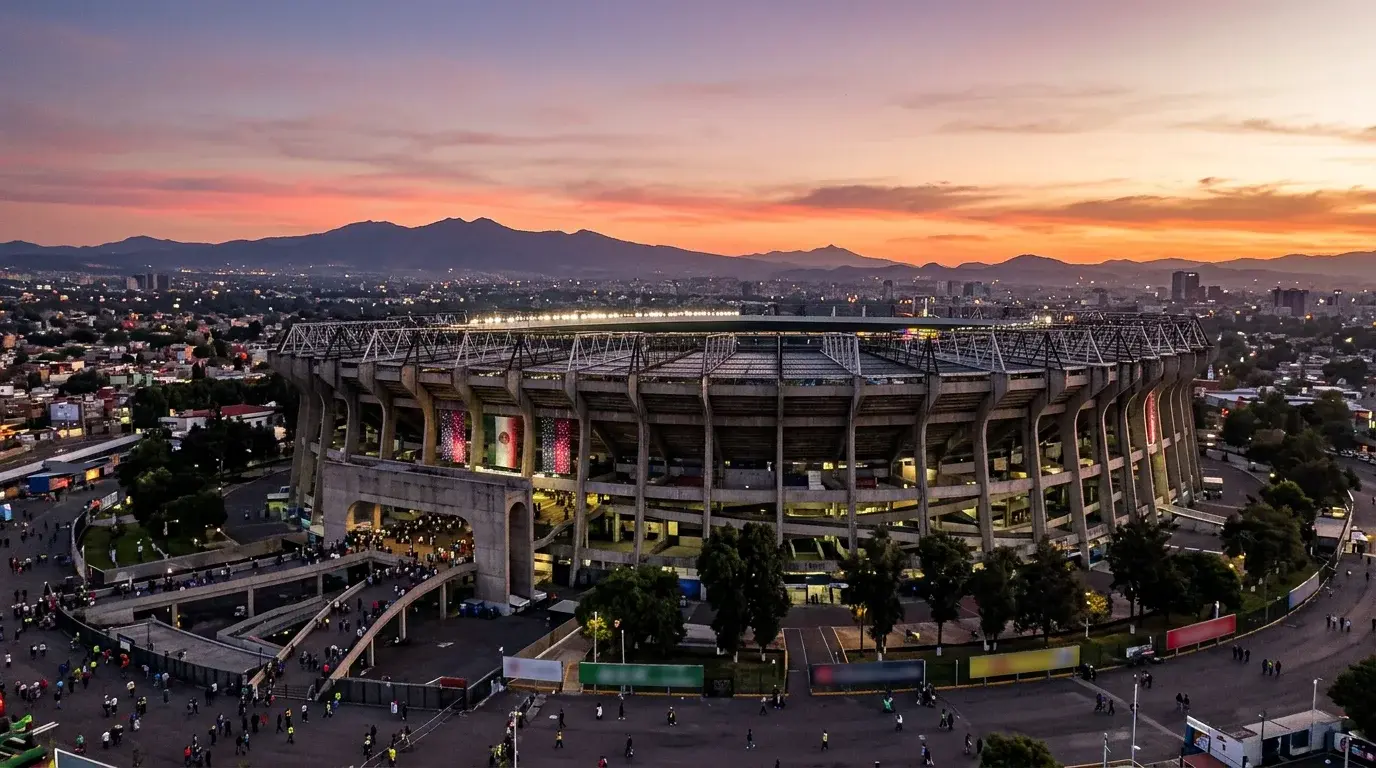
Two World Cup finals, Maradona’s “Hand of God” and “Goal of the Century” within the same match, and generations of Mexican football history contained within a single structure. Estadio Azteca is not merely a stadium; it is a temple where football’s greatest moments have occurred and where World Cup 2026 begins with the opening match on 11 June. No venue on Earth carries more World Cup significance, and the tournament organisers honoured that legacy by selecting Azteca to launch football’s greatest competition.
The stadium sits in Mexico City at an altitude of 2,240 metres above sea level, creating atmospheric conditions that affect players and supporters alike. This elevation reduces oxygen availability, increases ball flight speed, and creates challenges for teams unprepared for high-altitude competition. The opening match pits co-hosts Mexico against South Africa in what promises to be a spectacular beginning to six weeks of tournament football.
My assessment of Estadio Azteca centres on historical significance, atmospheric intensity, and the unique challenges that altitude presents. For Irish supporters fortunate enough to attend, understanding these factors enhances appreciation of a venue that has witnessed football history repeatedly.
A Cathedral of Football History
Built in 1966 and hosting its first World Cup four years later, Estadio Azteca has accumulated history that no other venue can match. Pelé lifted the Jules Rimet Trophy here in 1970 after Brazil’s magnificent performance crowned the tournament most romantics consider football’s finest. Sixteen years later, Diego Maradona produced both football’s most controversial and most beautiful goals within minutes of each other against England, defining a World Cup that culminated in Argentine triumph.
Two World Cup finals played on this turf creates legacy that MetLife Stadium’s 2026 Final will struggle to match despite modern infrastructure advantages. The 1970 Final saw Brazil defeat Italy 4-1 in a match widely considered the greatest World Cup Final ever played. The 1986 Final brought West Germany heartbreak as Argentina claimed their second title. These memories permeate the venue, creating atmosphere that modern constructions cannot replicate.
Beyond World Cups, Azteca has hosted five Copa América finals, countless Liga MX matches, and international friendlies that have shaped Mexican football culture. The venue represents more than sporting facility; it embodies national identity in ways that Irish supporters familiar with Croke Park’s significance will understand intuitively.
Stadium Profile and Altitude Challenge
Estadio Azteca’s current capacity of approximately 87,000 makes it among the world’s largest football stadiums. Renovations for World Cup 2026 have modernised facilities while preserving the venue’s essential character. The distinctive oval shape and steep seating angles create acoustic properties that amplify crowd noise to levels that overwhelm unprepared visitors.
The 2,240-metre altitude presents genuine athletic challenge. Oxygen levels at this elevation are approximately 20% lower than sea level, affecting endurance, recovery, and explosive performance. Teams unfamiliar with altitude competition often struggle during final 20 minutes when fatigue compounds oxygen deficit. Mexico’s players, accustomed to these conditions, gain measurable advantage that visiting nations must prepare to counter.
Air pressure differences at altitude affect ball flight in ways that goalkeepers particularly notice. Long-range shots move faster and dip later than sea-level physics would suggest, creating uncertainty for keepers positioning themselves based on European experience. Set-piece specialists gain advantage when familiar with altitude effects, while those unprepared face unpleasant surprises.
For supporters, altitude effects manifest as shortness of breath during exertion and potential headaches during acclimatisation. The stadium’s steep seating requires climbing that becomes more challenging at elevation. Hydration, gradual exertion, and avoiding alcohol during initial days help mitigate effects that vary based on individual physiology.
World Cup 2026 Opening Match
| Date | Match | Irish Time | Significance |
|---|---|---|---|
| 11 June | Mexico vs South Africa | 23:00 | Tournament Opening Match |
The opening match kicks off World Cup 2026 at 23:00 Irish time on 11 June, allowing European audiences comfortable viewing of the tournament’s beginning. Mexico face South Africa in a fixture that echoes the 2010 World Cup opener when South Africa hosted the tournament. The symbolism connects two milestone moments in World Cup expansion and development.
Opening matches carry unique pressure that often produces cautious, defensive football rather than the spectacle neutrals hope for. Mexico’s home advantage and altitude familiarity should provide edge that creates attacking intent, while South Africa’s defensive organisation and counter-attacking threat prevent comfortable domination. Expect competitive rather than comprehensive Mexican victory.
The atmosphere at Azteca for this fixture will be extraordinary. Mexican supporters understand the honour of hosting the opening match and will create noise levels that television cannot adequately capture. The combination of national pride, World Cup anticipation, and Azteca’s legendary acoustics produces environment that affects both teams regardless of preparation.
Getting to Azteca from Ireland
Mexico City accessibility from Ireland requires consideration of limited direct flight options. Most routes involve connections through American hubs like Houston, Dallas, or Atlanta, with total journey times ranging from 14-18 hours. Alternative European connections through Madrid or Amsterdam provide options that avoid US transit but add similar duration.
Estadio Azteca sits in the Coyoacán borough, approximately 15 kilometres south of Mexico City’s historic centre. The Metro system provides efficient access via Line 2 to Tasqueña station, followed by the Tren Ligero light rail to Estadio Azteca station. This public transport route costs minimal pesos and avoids traffic congestion that makes road transport unreliable on match days.
Accommodation options span from luxury hotels in Polanco and Roma to budget options throughout the metropolitan area. The city’s enormous size means location choices significantly affect daily travel requirements. Staying near Metro lines ensures mobility without dependence on taxis or rideshares, though safety considerations should inform neighbourhood selection.
Budget estimates for Irish supporters attending the opening match vary dramatically based on choices. Flight and basic accommodation for one week might cost €1,200-2,000, significantly cheaper than American venue attendance. Mexico City’s favourable exchange rate and lower cost of living compared to US cities creates accessible World Cup experience for budget-conscious supporters.
Betting Considerations: The Altitude Factor
Does altitude affect betting decisions for Azteca fixtures? My analysis suggests measurable impact that deserves consideration when assessing matches at this venue. Teams acclimatised to altitude gain genuine advantage that odds may not fully reflect.
Mexico’s home advantage at Azteca extends beyond typical crowd support. Their players train at altitude regularly, understanding physical demands that opponents experience as novel challenge. Late-game Mexican pressure historically produces goals when visitors tire, creating in-play opportunities for those anticipating this pattern.
Over/under goals markets might favour unders during opening match caution, but altitude effects on ball flight suggest increased scoring in subsequent Azteca fixtures as visiting teams adjust to unfamiliar conditions. The tournament’s only Mexican high-altitude venue creates unique market opportunities that American sea-level stadiums do not present.
My Azteca Assessment
Estadio Azteca represents World Cup football’s most significant venue returning to host tournament matches. The historical resonance, atmospheric intensity, and unique altitude challenge creates experience that modern American stadiums cannot replicate. Irish supporters fortunate enough to attend will witness football in surroundings that have shaped the sport’s greatest moments.
The opening match sets World Cup 2026 in motion from the most appropriate stage possible. Mexico hosting at Azteca connects this tournament to football heritage that spans decades, while the fixture itself promises competitive football that launches six weeks of global celebration. Watch from wherever you are, but understand that television cannot capture what Azteca delivers to those present.
Safety considerations for Ireland supporters visiting Mexico City deserve frank acknowledgment. The city contains areas that require awareness and precaution, though tourist districts and stadium surroundings remain generally safe during major events. Travelling in groups, avoiding flashy displays of wealth, and using official transport reduces risks that unfamiliarity heightens. Research specific neighbourhood recommendations before booking accommodation.
The culinary experience surrounding Azteca attendance enhances overall trip value. Mexican cuisine extends far beyond Irish expectations of Tex-Mex approximations, with regional specialties that reward adventurous eating. Street food around the stadium offers authentic experiences at minimal cost, while upscale restaurants in Polanco and Roma provide refined interpretations for those seeking comfort. The food alone justifies extended Mexico City stays.
Cultural attractions beyond football make Mexico City worthy destination regardless of World Cup involvement. The National Museum of Anthropology, Frida Kahlo’s Casa Azul, and the ancient Teotihuacán pyramids provide context for Mexican identity that football reflects. Irish supporters combining World Cup attendance with cultural exploration find value that single-event focus misses.
