

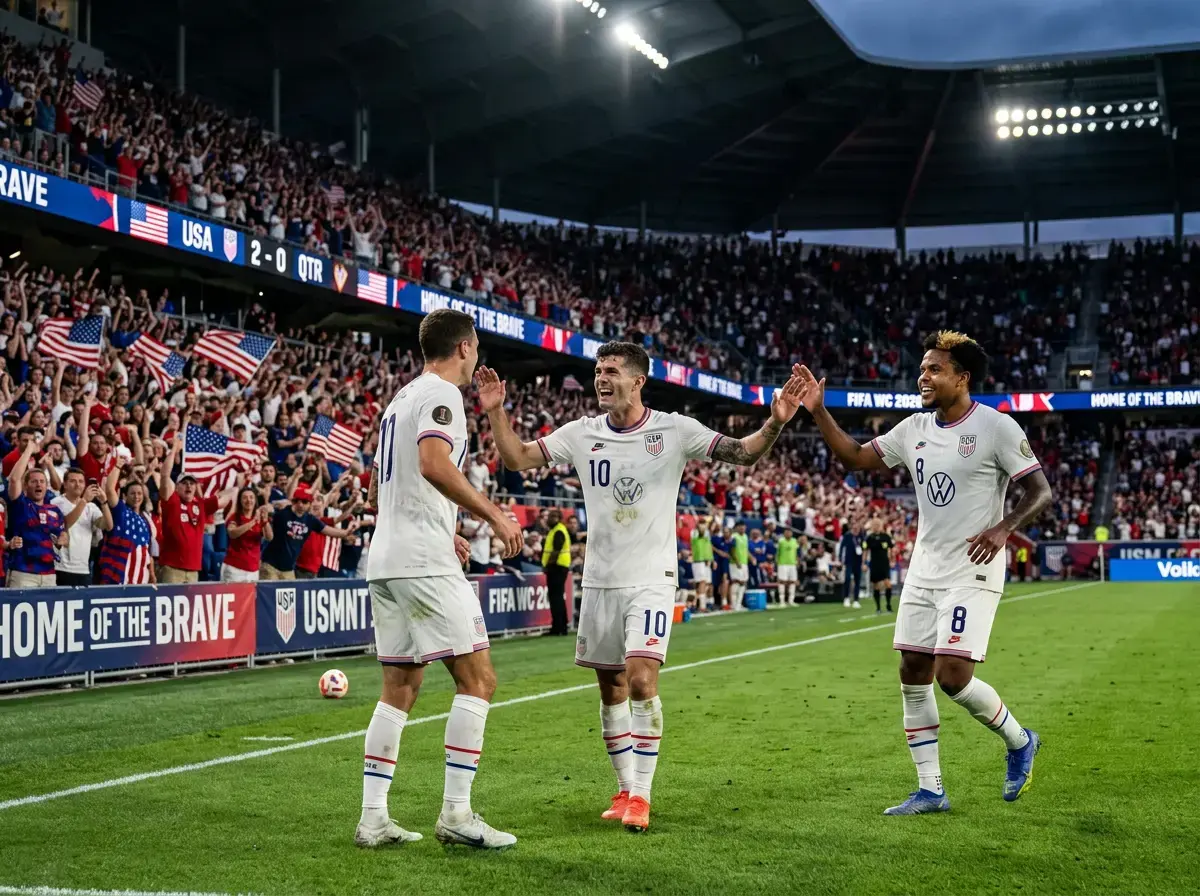
The last time the United States hosted the World Cup, in 1994, the tournament exceeded every expectation. Record attendances, passionate crowds, and a genuine football awakening that planted seeds still bearing fruit three decades later. Now the world returns to American stadiums with expectations transformed by those intervening years. MLS has matured into a competitive league. American players occupy prominent roles at elite European clubs. The domestic fanbase has grown from curious novelty-seekers to informed supporters who understand the game’s nuances. USA World Cup betting reflects this evolution — the hosts are no longer underdogs hoping to survive; they are genuine contenders expected to deliver performances that match their ambitions.
USA odds of approximately 14/1 position them among the tournament’s genuine contenders. Home advantage in football remains one of sport’s most powerful forces — familiar conditions, passionate crowds, optimised travel logistics, the psychological comfort of competing on known territory. The 1994 hosts reached the Round of 16; the 2002 co-hosts reached the quarter-finals. Historical patterns suggest USA should at minimum match these achievements, with the expanded format providing additional pathways to deep progression.
I rate USA as interesting value at current prices. The 14/1 odds imply approximately 7% probability, which feels marginally pessimistic given home advantage and squad quality. My value assessment sits at 6/10 — not a primary recommendation, but worth consideration for punters who believe home advantage translates to competitive edge. The American ceiling remains unclear; their floor involves comfortable group qualification and Round of 16 progression.
Squad Overview: The American Project
The USA squad represents the most talented generation in American football history. Players competing at elite European clubs bring experience and quality that previous generations could not match. The depth from goalkeeper to striker exceeds historical benchmarks, creating genuine selection competition that raises overall standards.
Matt Turner provides goalkeeping quality that matches most international competitors. His Arsenal experience, despite limited playing time, maintains sharpness at elite level. The American goalkeeping tradition has improved significantly, with Turner representing the latest in a line of capable shot-stoppers.
The defence features Sergiño Dest’s attacking instincts at full-back and Antonee Robinson’s Premier League experience on the opposite flank. Centrally, Chris Richards and Cameron Carter-Vickers provide options that have proven themselves in European leagues. The defensive organisation has improved under Gregg Berhalter, though vulnerabilities against elite attacking units remain a concern for deeper tournament progression.
Christian Pulisic leads the squad as captain and primary creative force. The AC Milan winger has overcome injury concerns to establish himself among Serie A’s elite players, his directness and goal threat making him essential to American attacking play. Weston McKennie provides midfield industry and aerial threat, while Tyler Adams offers defensive solidity that allows more creative teammates to express themselves. Giovanni Reyna’s potential remains tantalising despite injury disruptions that have limited his development.
The attacking options extend beyond Pulisic. Folarin Balogun has emerged as a genuine goal threat, his Monaco performances demonstrating clinical finishing that translates to international football. Josh Sargent provides physical presence and intelligent movement, while Tim Weah offers pace and directness from wide positions.
Group D Preview: Home Comforts
USA’s Group D assignment presents manageable challenges on home soil. Paraguay, Australia, and Turkey form a group where American qualification should be comfortable, though each opponent offers different tests that cannot be dismissed lightly.
Paraguay bring South American competitive spirit and organisation that makes them awkward opponents. Their qualification through CONMEBOL demonstrates ability to compete against Brazil, Argentina, and other continental powers. The physical approach may frustrate American technical preferences, requiring patience and precision that tournament football demands. Home advantage should provide the edge required, but Paraguay will not yield without resistance. USA should win 2-0 or 2-1 in a match tighter than many expect.
Australia offer familiar opposition following the 2022 World Cup meeting. The Socceroos’ physicality and direct approach create different challenges than technical opponents, while their Premier League-based players understand the pressure of major tournaments. The Australian fighting spirit has frustrated more talented opponents throughout World Cup history. USA should win 2-1 or 3-1, with the crowd advantage proving decisive in tighter moments.
Turkey represent the group’s most dangerous opponent. Their qualification through UEFA demonstrates European quality, while emerging talents like Arda Güler and Kenan Yıldız suggest a squad on the rise rather than in decline. The Turkish defensive organisation will test American creativity, while their counter-attacking threat could punish any complacency. I expect a competitive match — USA 1-1 or 2-1 — with neither team establishing clear dominance throughout.
The group complexity demands that USA approach each fixture with maximum focus. Home advantage creates expectation rather than guaranteeing results, and any dropped points would increase pressure for subsequent matches. Berhalter must balance squad rotation needs against the danger of fielding weakened teams in genuinely competitive fixtures.
Berhalter’s Tactical Vision
Gregg Berhalter has built a system that maximises American technical quality while addressing defensive vulnerabilities. His preferred 4-3-3 formation allows Pulisic freedom to roam while maintaining midfield stability through Adams’ positioning. The approach emphasises possession and patient buildup rather than direct counter-attacking, reflecting the technical development of American players.
The pressing triggers have become clearer under Berhalter’s guidance. USA press high when opponents build from the back, forcing errors that create attacking opportunities. This approach requires fitness and coordination that intensive preparation camps develop. The risk lies in exposing defensive vulnerabilities when pressing fails — elite opponents can punish overcommitment.
Set pieces represent a genuine American strength. The aerial threat from McKennie, Richards, and other physical players creates consistent opportunities from corners and free kicks. Berhalter has invested significant preparation time in dead-ball situations, recognising that tournament football often turns on these marginal gains.
Key Players: American Stars
Christian Pulisic carries the weight of American expectations. His ability to create chances from nothing, to score decisive goals, to inspire teammates through individual brilliance — these qualities make him essential to American hopes. The AC Milan winger has matured since his Chelsea struggles, finding consistency that earlier seasons lacked. In a home World Cup, Pulisic could emerge as one of the tournament’s defining players.
Weston McKennie provides the engine that American football requires. His box-to-box presence, aerial ability, and tireless running create the platform for more technical teammates to express themselves. The Juventus midfielder understands big-game pressure, his experience in Serie A and Champions League translating to international tournaments.
Tyler Adams anchors the midfield with defensive intelligence that protects the back four. His positioning and reading of the game allow the USA to defend with fewer players, maintaining attacking threat while limiting opposition opportunities. Adams’ leadership qualities extend beyond his playing contribution.
Betting Analysis: Home Advantage Value
USA at 14/1 offers interesting value for believers in home advantage. The odds imply 7% probability, which I consider marginally pessimistic given the historical impact of hosting major tournaments. Home nations consistently outperform expectations, and the USA’s squad quality supports genuine contention beyond merely reaching the latter stages.
The home advantage factor deserves quantification. Studies suggest hosting provides approximately 10-15% improvement in outcomes, reflecting familiar conditions, crowd support, and optimised logistics. For a nation with USA’s baseline quality, this boost could prove decisive in marginal knockout matches where fine margins determine progression.
USA to reach the quarter-finals at approximately 6/5 provides reasonable value. Group qualification should be comfortable, and the early knockout rounds will present beatable opposition in front of home crowds. The quarter-finals represent realistic expectation for this squad regardless of home advantage. I rate this market at 7/10 for value — the pricing feels marginally too long given the combination of quality and home support.
USA to reach the semi-finals at approximately 5/2 offers speculative value for those who believe home advantage extends to elite knockout matches. The pricing compensates for uncertainty while providing genuine returns. I rate this at 5/10 — interesting but not compelling without knowing the bracket position.
USA to win Group D at approximately 4/6 represents fair odds for the most likely outcome. Turkey provide the primary threat, but home advantage should prove decisive in any direct confrontation. The pricing offers minimal edge but reflects accurate probability assessment.
Pulisic to score in the tournament at approximately 4/9 represents poor value for near-certain occurrence. His attacking position and tournament duration make goals extremely likely, but the pricing offers no edge. Consider instead Pulisic anytime scorer in specific matches at longer individual odds.
My Verdict: Home Glory?
The USA enter their home World Cup with legitimate expectations of deep progression. The squad quality exceeds any previous American generation, the home advantage provides tangible benefits, and the expanded format offers multiple pathways to the later rounds. Whether this combination produces genuine contention for the trophy depends on factors that only tournament football can reveal.
The psychological dimension deserves consideration. Playing at home creates pressure alongside opportunity — American players will face expectations that previous generations never experienced. The weight of a nation’s hopes, amplified by home crowds and domestic media intensity, can inspire or overwhelm depending on individual responses. Managing this pressure, converting home support into competitive advantage rather than paralysing anxiety, will determine American success more than tactical preparation.
The generational factor adds additional motivation. This squad has grown up dreaming of a home World Cup, their entire development pathway oriented toward this moment. Pulisic, McKennie, Adams, Reyna — these players represent the culmination of two decades of American football investment. The infrastructure, the academies, the European pathways: everything was designed to produce a generation capable of competing at the highest level on home soil.
My prediction places the USA in the quarter-finals, where I expect them to face a genuine contender in a match that defines their tournament legacy. The semi-finals remain possible if brackets align favourably. Reaching the final would require sustained excellence that American football has never demonstrated at senior level, though home advantage could provide the additional percentage required to overcome historical limitations.
For betting purposes, I recommend USA to reach the quarter-finals at 6/5 as the primary wager. This captures home advantage benefits while acknowledging the uncertainty of knockout football. Consider small stakes on USA to reach the semi-finals at 5/2 for those seeking longer-odds exposure. The American moment has arrived — whether they seize it remains to be seen.
