

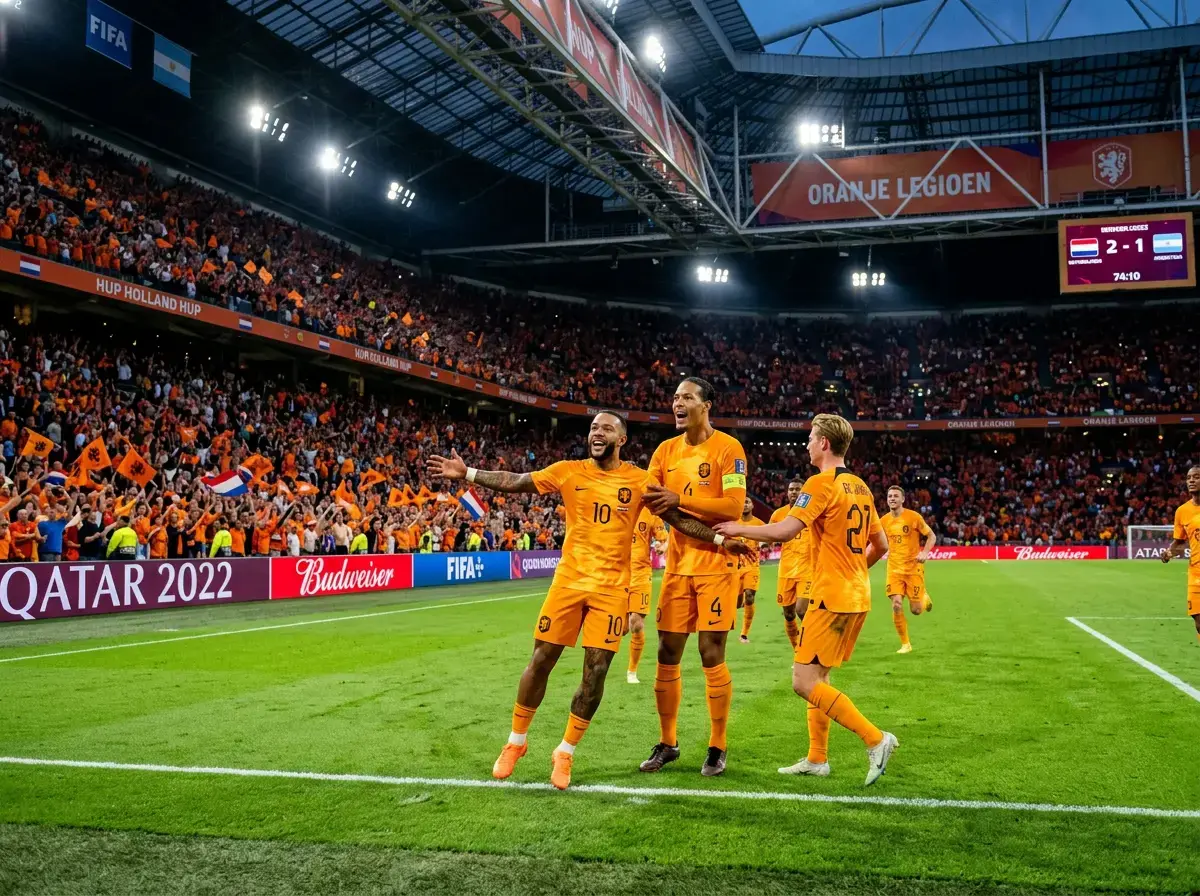
The Netherlands have been the nearly-men of World Cup football for half a century. Three finals lost — 1974, 1978, 2010 — each time to the host nation, each time agonisingly close to glory that slipped away. The Total Football revolution of Cruyff’s era transformed how the world understood the game, yet the trophy cabinet remains empty where World Cup winners’ medals should sit. Dutch football has always prioritised beauty over pragmatism, entertainment over results, and this philosophical commitment has produced some of the greatest football ever played while simultaneously denying them the ultimate prize. Now Oranje arrive in America with another generation of technical talents and another opportunity to convert ability into achievement.
Netherlands World Cup betting markets price the Dutch at approximately 16/1 for outright victory, reflecting respect for their quality alongside scepticism about their consistency. The squad features genuine stars — Virgil van Dijk, Frenkie de Jong, Cody Gakpo — supplemented by depth that most nations would envy. Ronald Koeman has rebuilt the team since his return as manager, implementing a more pragmatic approach that sacrifices some Dutch flair in pursuit of tournament results. Whether this compromise produces success or merely irritates purists remains to be seen.
I rate the Netherlands as speculative value at current prices. The 16/1 odds imply approximately 6% probability, which feels marginally pessimistic given their squad quality. My value assessment sits at 6/10 — interesting for punters seeking longer-odds exposure but not a primary recommendation. The Dutch can beat anyone when their rhythm clicks; they can also lose to anyone when concentration wavers. This inconsistency makes them exciting to watch and frustrating to back.
Squad Overview: Dutch Masters
The Netherlands squad blends established stars with emerging talents in a balance that reflects Dutch football’s perpetual renewal. The academy systems of Ajax, PSV, and Feyenoord continue producing technically proficient players, while overseas-based stars bring elite experience from the Premier League, La Liga, and Serie A.
Bart Verbruggen has emerged as first-choice goalkeeper, his Brighton performances earning international recognition. The young keeper combines shot-stopping ability with the composure on the ball that Dutch football demands. Justin Bijlow provides experienced backup, ensuring quality depth in a position that Dutch teams have sometimes struggled to fill.
Virgil van Dijk anchors the defence as one of the world’s elite centre-backs. His combination of physical presence, reading of the game, and distribution makes him essential to Dutch structure. The Liverpool captain’s experience of pressure matches translates seamlessly to international tournaments. Alongside him, Nathan Aké provides versatility and composure, while Matthijs de Ligt offers additional options despite inconsistent club form. The full-back positions feature Denzel Dumfries’ attacking instincts on the right and Jordi Alba’s successor on the left — likely Tyrell Malacia or Ian Maatsen depending on fitness.
Midfield showcases Dutch technical quality at its finest. Frenkie de Jong controls tempo with Barcelona intelligence, his ability to receive under pressure and play progressive passes making him essential to Dutch buildup. Teun Koopmeiners adds physical presence and goal threat from central positions, while Ryan Gravenberch has developed into a complete midfielder during his Liverpool tenure. The depth extends to Marten de Roon’s defensive solidity and Xavi Simons’ emerging creativity.
The attack features Cody Gakpo as the primary threat, his pace and finishing ability making him dangerous from wide positions or through the centre. Memphis Depay’s continued selection provides experience and unpredictability, though his consistency has declined from earlier peaks. The centre-forward position remains less settled — Brian Brobbey, Wout Weghorst, and Joshua Zirkzee all offer different qualities without any clearly establishing first-choice status.
Group F Preview: Netherlands’ Path
The Netherlands’ Group F assignment presents significant challenges alongside manageable opposition. Japan, Tunisia, and Sweden form a group where the Dutch should progress but cannot assume comfortable victory. Each opponent offers different tests that will reveal whether this squad possesses genuine tournament quality.
Japan represent genuine quality that has improved dramatically in recent years. Their performance against Germany at Qatar 2022 demonstrated ability to compete with and defeat European giants. The Samurai Blue combine technical proficiency with tactical discipline that frustrates opponents expecting Asian pushover. Players like Takefusa Kubo, Kaoru Mitoma, and Ritsu Doan provide creativity and goal threat that demands respect. I expect a competitive match — Netherlands 2-1 or 1-1 — with Japan providing genuine resistance throughout.
Tunisia bring North African organisation and fighting spirit that makes them dangerous against overconfident opponents. Their 2022 World Cup included a famous victory over France (albeit with France fielding a rotated team), demonstrating capability at the highest level. The Tunisian defensive structure frustrates technical teams seeking space to operate, while their counter-attacking threat punishes defensive lapses. The Netherlands should win 2-0 or 3-1, but the fixture demands professional application rather than assumed superiority.
Sweden offer Scandinavian physicality and set-piece threat that will test Dutch defensive concentration. Alexander Isak leads an attack capable of punishing defensive lapses, while the Swedish defensive structure makes them difficult to break down. The direct approach contrasts with Dutch technical preferences, creating an interesting tactical battle. The Netherlands should win 2-0 or 1-0 in a match that may prove tighter than expected.
The group complexity means the Netherlands cannot afford early complacency. Dropping points against Japan or Tunisia would create pressure for the final match against Sweden, where tired legs and psychological strain could produce unexpected results. Koeman must balance rotation needs against the danger of fielding weakened teams in genuinely competitive fixtures.
Koeman’s Tactical Evolution
Ronald Koeman’s return as Netherlands manager brought tactical pragmatism that previous regimes had rejected. His experience at Barcelona and with the national team during his first spell has produced a more balanced approach — still recognisably Dutch in technical emphasis but willing to sacrifice possession for defensive solidity when circumstances demand.
The base formation is a 4-3-3 that can shift into a 3-5-2 when additional central control is required. Van Dijk’s distribution allows Dutch teams to build from the back under pressure, while De Jong’s positioning creates passing angles that bypass opposition pressing. The system emphasises controlled possession rather than Total Football’s fluidity, reflecting modern tournament football’s demands.
Defensively, Koeman has addressed vulnerabilities that plagued Dutch teams in previous tournaments. The pressing triggers are clearer, the defensive line sits slightly deeper, and the reliance on individual brilliance has diminished in favour of structured organisation. These changes frustrate purists who remember Dutch football at its most entertaining, but they may prove essential for tournament success.
Key Players: Dutch Quality
Virgil van Dijk remains the most important player in this squad. His presence transforms Dutch defensive capabilities, providing leadership, aerial dominance, and distribution that sets the tone for the entire team. At Liverpool, Van Dijk has won every major honour; for the Netherlands, he seeks the trophy that would complete a legendary career. His experience of pressure matches translates directly to tournament football.
Frenkie de Jong controls Dutch tempo with intelligence that few midfielders can match. His ability to receive the ball under pressure, turn away from markers, and play progressive passes makes him essential to Dutch buildup. The Barcelona midfielder has struggled with injuries in recent seasons, but when fit, he dictates matches through positioning and passing rather than physical dominance.
Cody Gakpo provides the attacking threat that Dutch teams require. His combination of pace, technique, and finishing ability makes him dangerous from wide positions or through the centre. The Liverpool forward has matured since his 2022 World Cup performances, adding consistency to his obvious talent. In a tournament setting, Gakpo could emerge as one of the competition’s leading scorers.
Betting Analysis: Oranje Value
Netherlands at 16/1 offers speculative value for believers in Dutch potential. The odds imply 6% probability, which I consider marginally pessimistic given squad quality that rivals most contenders. The issue lies in consistency rather than ability — when the Netherlands perform at their best, they can beat anyone; when they perform poorly, embarrassing defeats follow.
The historical context shapes market perception. Three World Cup finals lost creates narrative weight that affects pricing beyond pure probability assessment. Bookmakers and punters alike remember Dutch near-misses, which depresses odds relative to pure quality assessment. This creates potential value for those who believe past failures do not predict future performance.
Netherlands to reach the quarter-finals at approximately 5/4 provides reasonable value. Their group draw facilitates qualification, and the Round of 32 should present beatable opposition. The quarter-finals represent realistic expectation given recent tournament performances. I rate this market at 6/10 for value.
Netherlands to qualify from Group F at approximately 2/5 represents near-certainty priced accordingly. The margin provides minimal value, but the probability assessment is accurate. Japan represent the primary threat, making this slightly less certain than some qualification markets. I would avoid this market unless building accumulators.
Van Dijk to score in the tournament at approximately 7/4 offers interesting set-piece value. His aerial threat from corners creates consistent opportunities, and Dutch delivery will target him in dangerous positions. I rate this at 6/10 for individual market value.
Gakpo for top Dutch scorer at approximately 5/4 represents fair odds for the most likely outcome. His attacking position and involvement in Dutch play suggests he will create and convert opportunities at higher rates than teammates. The pricing offers minimal edge but reflects accurate probability.
My Verdict: Eternal Nearly-Men
The Netherlands possess the talent to win World Cup 2026 but lack the consistent winning mentality that separates champions from contenders. The Dutch way prioritises beautiful football over grinding results, and this philosophy has produced some of history’s finest football while denying the ultimate prize. Until proven otherwise, I expect this pattern to continue.
Koeman’s pragmatic evolution may address the consistency issues, but it also risks alienating a footballing culture that values entertainment alongside results. The balance between Dutch principles and tournament efficiency remains difficult to achieve. This squad could reach the final playing inspiring football; they could equally exit in the Round of 16 following an uncharacteristic defensive collapse. The uncertainty defines Dutch football — brilliance and frustration in equal measure.
The generational question deserves consideration. Van Dijk at 34, De Jong with recurring injury concerns, Memphis declining from his peak — the current generation may represent a narrowing window rather than sustained opportunity. Younger talents like Simons and Gravenberch show promise but lack tournament experience that only competitive football can provide. This World Cup may represent the optimal moment for Dutch success before generational transition creates additional challenges.
My prediction places the Netherlands in the quarter-finals, where I expect them to face a genuine contender in a match that could go either way. The semi-finals remain possible if brackets align favourably, though progression beyond requires sustained excellence that Dutch teams have historically struggled to maintain.
For betting purposes, I recommend Netherlands to reach the quarter-finals at 5/4 as the primary wager. This captures their quality while acknowledging the uncertainty that makes longer-odds bets speculative. Consider small stakes on outright at 16/1 for those who believe this generation can break the pattern. The Dutch will entertain regardless of results — they always do.
