

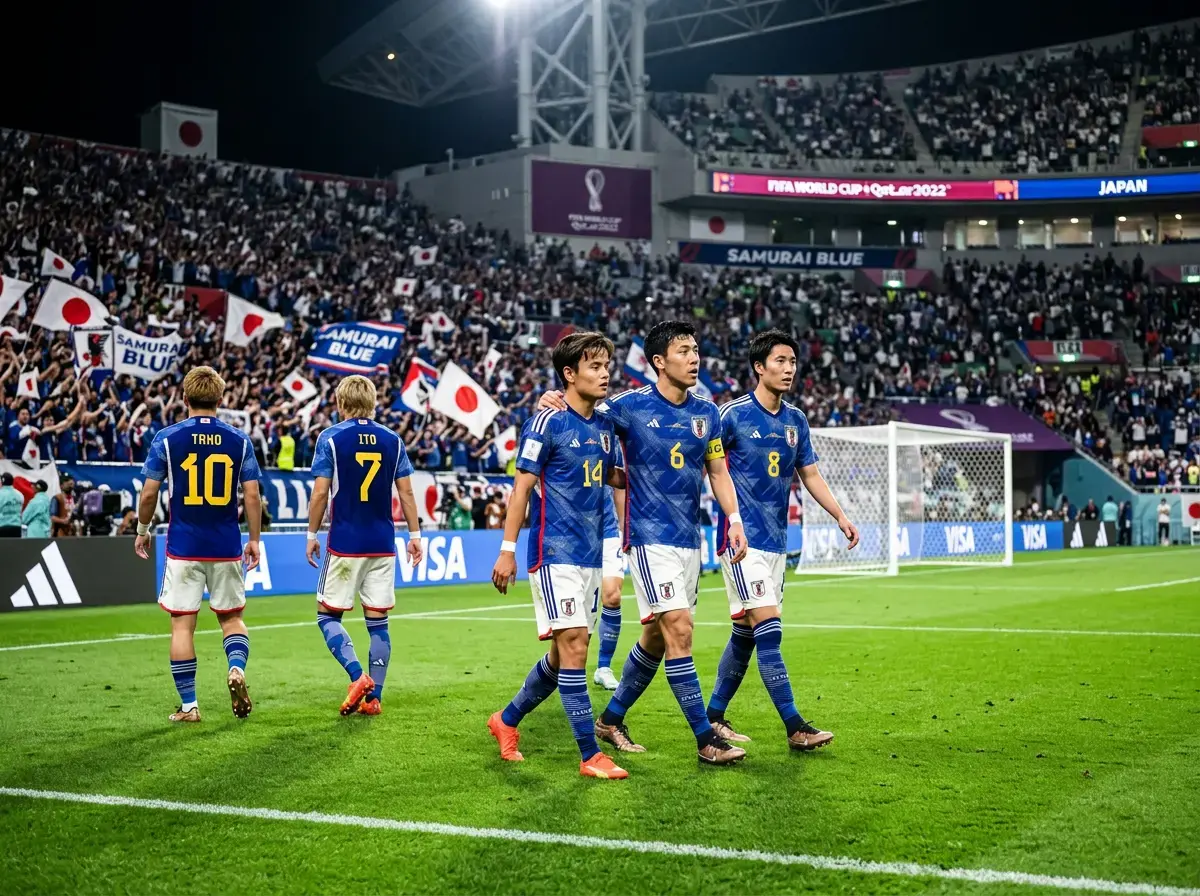
The 2022 World Cup reshaped global perceptions of Japanese football. Victories over Germany and Spain in the group stage demonstrated that the Samurai Blue could compete with and defeat European giants on football’s biggest stage. The image of Japanese players bowing to their supporters after the painful penalty shootout exit to Croatia captured a nation that had discovered new levels of competitive capability while maintaining the humility that defines Japanese sporting culture. Now Japan return with expectations transformed by those memorable nights in Qatar — no longer plucky underdogs hoping to survive, but genuine contenders expected to challenge for quarter-final progression and beyond.
Japan World Cup betting markets position the Samurai Blue at approximately 40/1 for outright victory, reflecting both respect for their 2022 performances and recognition that knockout progression requires consistency their history has not demonstrated. The squad features genuine European-based quality — Takefusa Kubo, Kaoru Mitoma, Ritsu Doan — supplemented by tactical discipline that frustrates opponents expecting Asian pushover. The Japanese approach combines technical proficiency with intensity that catches opponents by surprise.
I rate Japan as interesting speculative value. The 40/1 odds imply approximately 2.5% probability, which feels marginally pessimistic given their demonstrated ability to defeat elite opponents. My value assessment sits at 6/10 — worth consideration for punters seeking longer-odds exposure with potential for memorable returns.
Squad Overview: European Influence
Japan’s squad features more European-based players than any previous generation, their development at elite clubs translating to improved quality across all positions. This European influence represents the culmination of decades of investment in football development and player pathways.
Zion Suzuki has emerged as first-choice goalkeeper, his European experience providing confidence that translates to international pressure. The goalkeeping position has improved significantly, with capable options competing for starting positions.
The defence combines Japanese organisation with improved individual quality. Ko Itakura and Takehiro Tomiyasu provide central defensive experience from European leagues, while full-back positions feature attacking threat alongside defensive discipline. The defensive unit coordinates with precision that reflects Japanese cultural values — collective responsibility over individual brilliance.
Takefusa Kubo represents Japan’s primary creative force. The Real Sociedad attacker combines technical quality with the directness that European football has developed in his game. His ability to unlock defences through individual brilliance or intelligent combination play makes him essential to Japanese attacking threat. Kaoru Mitoma adds pace and dribbling ability from the opposite flank, his Brighton performances demonstrating Premier League quality.
The attacking options extend to Ritsu Doan’s experience and Ayase Ueda’s goal threat. The depth allows tactical flexibility depending on opposition quality, though the lack of a dominant centre-forward sometimes limits Japanese effectiveness in the final third.
Group F Preview: Netherlands Challenge
Japan’s Group F assignment presents significant challenges alongside manageable opposition. Netherlands, Tunisia, and Sweden form a group where Japanese qualification is possible but not guaranteed. The group complexity demands maximum focus from the opening fixture, with no matches offering comfortable assumptions.
Netherlands represent the group’s primary challenge, bringing Dutch technical quality and tournament experience that exceeds Japanese pedigree. The tactical battle between Dutch possession and Japanese pressing could produce a fascinating match reminiscent of Japan’s 2022 performances against Germany. Japan’s best approach involves pressing high to disrupt Dutch buildup, forcing errors that create counter-attacking opportunities through Kubo and Mitoma’s pace. Van Dijk and De Jong will test Japanese defensive organisation, while Gakpo’s threat requires constant attention. I expect Netherlands to win 2-1, though Japan could produce an upset as they did against Germany in 2022 — those victories demonstrated Japanese capability against European giants.
Tunisia bring North African quality that matches Japan’s competitive level. This fixture could prove decisive for group qualification, with both teams targeting second place behind Netherlands. The tactical battle between Japanese pressing and Tunisian defensive organisation creates an intriguing contest. Both nations demonstrated capability at the 2022 World Cup, making this genuinely unpredictable. I expect a competitive 1-1 draw or narrow 2-1 Japanese victory that may require late drama to decide.
Sweden offer Scandinavian physicality that Japanese teams have historically struggled against. The direct approach — long balls, aerial duels, set-piece threat through Isak — creates different challenges than the technical opponents Japan often face. However, Japanese tactical discipline and improved physical qualities should facilitate a 2-1 or 1-0 victory. This represents the most winnable fixture in the group.
The qualification pathway likely requires accumulating points against Tunisia and Sweden while avoiding heavy defeat to Netherlands. Second place behind the Dutch represents the realistic target, positioning Japan for a Round of 32 fixture against a third-placed team from a different group.
Key Players: Samurai Stars
Takefusa Kubo represents Japan’s primary creative force and their best individual player. The Real Sociedad attacker combines technical quality with the directness that European football has developed in his game. His ability to unlock defences through individual brilliance or intelligent combination play makes him essential to Japanese attacking threat. Kubo has matured significantly since his teenage years, adding consistency and decision-making to his obvious talent. In World Cup football, he could emerge as one of the tournament’s standout performers.
Kaoru Mitoma adds pace and dribbling ability that terrorises defenders. His Brighton performances have established him as one of the Premier League’s most exciting wingers, his direct running creating opportunities that more conventional players cannot produce. Mitoma’s ability to beat defenders one-on-one stretches opposition defences, creating space for teammates to exploit. His development under Roberto De Zerbi has added tactical intelligence to natural athleticism.
Wataru Endo provides midfield solidity that allows more creative teammates to express themselves. The Liverpool midfielder’s defensive positioning and reading of the game protect the Japanese back line during opposition attacks. His Premier League experience under Jürgen Klopp and later Arne Slot has developed his understanding of high-level tactical demands.
Betting Analysis: Asian Value
Japan at 40/1 offers speculative value for believers in their 2022 performances representing genuine capability rather than fortunate circumstances. The odds imply 2.5% probability, which I consider marginally pessimistic given their demonstrated ability to defeat elite opponents. The Germany and Spain victories were not flukes but demonstrations of tactical excellence and individual quality that merit respect.
Japan to reach the quarter-finals at approximately 4/1 provides interesting value for those who believe Japanese football has genuinely evolved. Group qualification is achievable against Netherlands, Tunisia, and Sweden, and the early knockout rounds could present beatable opposition depending on bracket position. I rate this at 6/10 for value — speculative but with genuine upside.
Japan to qualify from Group F at approximately 11/8 offers the most sensible entry point for Japanese betting exposure. The pricing reflects genuine uncertainty given the Netherlands challenge, and I expect Japan to finish second through victories over Tunisia and Sweden. I rate this at 7/10 for value — one of the better-priced qualification markets.
Kubo to score in the tournament at approximately 6/4 represents fair odds for likely occurrence. His attacking position and Japan’s expected progression suggest scoring opportunities will arise. The pricing offers limited edge but reflects accurate probability assessment.
My Verdict: Rising Power
Japan have evolved from World Cup participants to genuine competitors across recent tournaments. The 2022 victories over Germany and Spain were not flukes but demonstrations of quality that European-based development has produced over decades of investment. This generation possesses the technical ability and tactical discipline to compete at the highest level when conditions suit their approach.
The question is whether they can translate group-stage brilliance into knockout success. The Croatia defeat in 2022 highlighted the fine margins that separate progression from elimination — Japan dominated that match without finding the winning goal, ultimately losing on penalties. Japanese football must prove it has the psychological resilience to win matches when spot-kicks or tight margins determine outcomes. The 2022 exit still haunts supporters who believe that squad deserved quarter-final progression.
The tactical approach suits knockout football when opponents underestimate Japanese intensity. The high press disrupts possession-based teams, while quick transitions exploit defensive vulnerabilities. Against teams who respect Japanese capability and prepare accordingly, the approach becomes more difficult to execute. The 2026 tournament will reveal whether Japan can succeed against opponents who have studied their methods.
My prediction places Japan in the Round of 16, where another tight match awaits. Quarter-final progression is realistic if brackets align favourably and the lessons from Croatia’s penalty victory have been absorbed. The semi-finals remain theoretically possible but practically unlikely given the quality gap with elite contenders.
For betting purposes, I recommend Japan to qualify from Group F at 11/8 as the primary wager. This captures their genuine quality while avoiding the uncertainty of knockout progression. Consider small stakes on quarter-final progression at 4/1 for those seeking speculative exposure to Japanese quality that current pricing undervalues.
